


Hey there! I'm a supplier of ASME B16.5 RF flanges, and today I wanna chat about the thermal expansion characteristics of these flanges. It's super important to understand this stuff, especially if you're in the industry and looking to use these flanges in your projects.
What are ASME B16.5 RF Flanges?
First off, let's have a quick intro to ASME B16.5 RF flanges. ASME B16.5 is a standard that covers pipe flanges and flanged fittings from NPS 1/2 through NPS 24, and the "RF" stands for Raised Face. These flanges are widely used in various industries like oil and gas, chemical processing, and power generation. They're designed to connect pipes, valves, pumps, and other equipment, creating a leak-tight joint. You can check out more about RF Flange NPS 1/2~NPS24 on our website.
Thermal Expansion Basics
Before we dive into the thermal expansion characteristics of ASME B16.5 RF flanges, let's understand what thermal expansion is. Simply put, when a material is heated, it expands, and when it's cooled, it contracts. This is a fundamental property of most materials, and it occurs because the atoms and molecules in the material gain more energy when heated, causing them to vibrate more and take up more space.
The amount of expansion or contraction depends on a few factors:
- The material of the flange: Different materials have different coefficients of thermal expansion (CTE). For example, carbon steel, which is commonly used in ASME B16.5 RF flanges, has a CTE of around 6.5 x 10^-6 in/in/°F (11.7 x 10^-6 m/m/°C). Stainless steel, on the other hand, has a slightly higher CTE.
- The temperature change: The greater the temperature difference, the more the flange will expand or contract.
- The size of the flange: Larger flanges will generally experience more expansion or contraction than smaller ones due to their larger volume.
Thermal Expansion Characteristics of ASME B16.5 RF Flanges
Now, let's get into the specific thermal expansion characteristics of these flanges.
Linear Expansion
One of the main aspects of thermal expansion is linear expansion, which refers to the increase in length, width, or thickness of the flange when heated. For ASME B16.5 RF flanges, the linear expansion can cause issues if not properly accounted for. For example, if a flange is rigidly installed and then subjected to a significant temperature increase, the expansion can create excessive stress on the flange and the connected components. This stress can lead to problems such as gasket failure, bolt loosening, or even flange cracking.
To calculate the linear expansion of an ASME B16.5 RF flange, you can use the following formula:
ΔL = L₀ × α × ΔT
where:
- ΔL is the change in length
- L₀ is the original length
- α is the coefficient of thermal expansion
- ΔT is the change in temperature
Let's say you have a carbon steel ASME B16.5 RF flange with an original diameter of 10 inches (L₀), and the temperature increases by 200°F (ΔT). Using the CTE of carbon steel (α = 6.5 x 10^-6 in/in/°F), we can calculate the change in diameter:
ΔL = 10 × 6.5 x 10^-6 × 200 = 0.013 inches
This might seem like a small amount, but in a high-pressure or high-precision application, even this small expansion can cause problems.
Effects on Flange Joints
The thermal expansion of ASME B16.5 RF flanges can also have a significant impact on the flange joints. Flange joints typically consist of a flange, a gasket, and bolts. When the flange expands due to heat, the gasket can be compressed or displaced, which can affect the sealing performance of the joint.
If the compression on the gasket becomes too high, it can lead to gasket extrusion, where the gasket material is forced out of the flange joint. On the other hand, if the compression decreases due to the flange's expansion, it can result in a leaky joint. Additionally, the thermal expansion of the flange can cause the bolts to stretch or loosen, further compromising the integrity of the joint.
To mitigate these issues, it's important to select the right gasket material and bolt preload for the application. For example, some gasket materials are more resistant to high temperatures and can better withstand the changes in compression caused by thermal expansion. Similarly, proper bolt preloading can help maintain a consistent clamping force on the gasket, even as the flange expands and contracts.
Considerations for Different Flange Types
ASME B16.5 RF flanges come in different types, such as weld neck flanges, slip-on flanges, and blind flanges. Each type has its own thermal expansion characteristics.
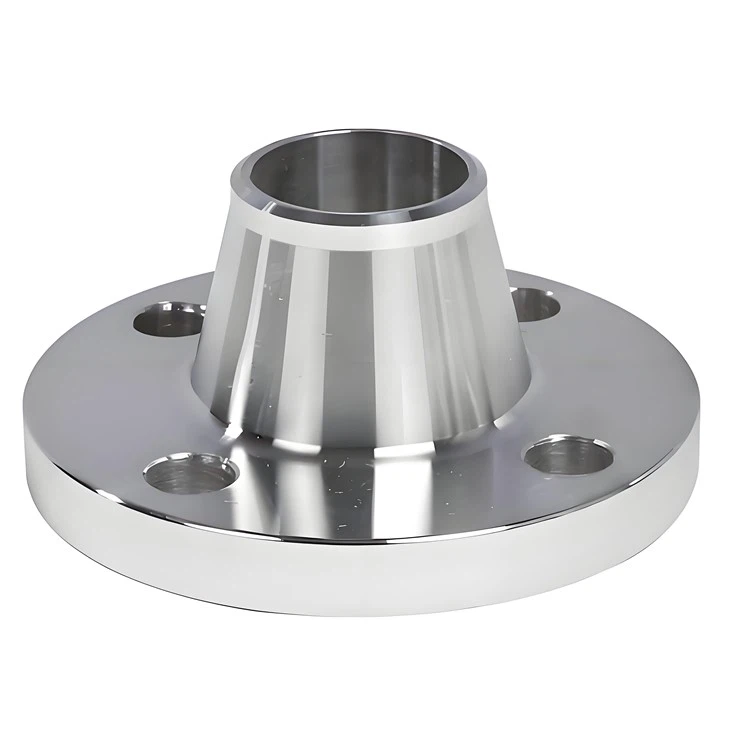

Weld Neck Flanges are known for their high strength and good fatigue resistance. They are welded to the pipe, which provides a more rigid connection. However, this also means that the thermal expansion of the flange and the pipe is more likely to be coupled, which can create additional stress at the weld joint. When using weld neck flanges in high-temperature applications, it's important to ensure that the weld is properly designed and executed to handle the thermal stresses.
Slip-on flanges, on the other hand, are easier to install but are less rigid than weld neck flanges. They can slide over the pipe, which allows for some relative movement between the flange and the pipe during thermal expansion. This can help reduce the stress on the flange and the joint. However, slip-on flanges may require additional support or reinforcement to prevent excessive movement.
Blind flanges are used to close the end of a pipe or vessel. They are not connected to a pipe in the same way as other flanges, but they still experience thermal expansion. When using blind flanges in high-temperature applications, it's important to consider the potential for thermal stress and ensure that the flange is properly supported.
Dealing with Thermal Expansion in Large-Scale Flanges
For larger-scale flanges, such as those in the NPS 26 to NPS 60 range, the thermal expansion characteristics become even more critical. These flanges are covered by the ASME B16.47 standard, and you can find more details about RF Flange NPS 26~NPS60 on our website.
Larger flanges have a greater volume, which means they can experience more significant expansion and contraction. This can lead to even higher stresses on the flange and the connected components. To deal with these issues, additional measures may be required, such as using expansion joints or flexible connectors. These devices can absorb the thermal expansion and contraction, reducing the stress on the flange and the joint.
Conclusion and Call to Action
Understanding the thermal expansion characteristics of ASME B16.5 RF flanges is crucial for ensuring the safe and reliable operation of your piping systems. Whether you're in the oil and gas industry, chemical processing, or any other field that uses these flanges, it's important to take thermal expansion into account when designing, installing, and maintaining your systems.
As a supplier of ASME B16.5 RF flanges, we have the expertise and experience to help you select the right flanges for your application and provide you with the support you need. If you're interested in learning more about our products or have any questions about thermal expansion, don't hesitate to reach out to us. We're here to help you make the best decisions for your projects. Let's start a conversation and see how we can work together!
References
- ASME B16.5 - Pipe Flanges and Flanged Fittings
- ASME B16.47 - Large Diameter Steel Flanges
- Material Science textbooks on thermal expansion properties of metals