
Latest Products


Contact Us
- No.97, 4th Avenue, Binhai Economic and Technology Development Zone, Wenzhou, China
- sales@gzp-valve.com
- +86-577-85859689
Your Professional Globe Valve Supplier
Our company owns a full set of equipment,complete processing and testing methods.The establishing of CAD valve design center and three-dimensional simulated manufacturing experimental design system ensures that new products with high quality can be developed promptly.Implementing perfect quality assurance system,our company is making unremitting endeavor for obtaining API certification on the passing ISO 9001, CE, API 6D International Quality Certification.
Reliable Product Quality
Implementing perfect quality assurance system,our company is making unremitting endeavor for obtaining API certification on the passing ISO 9001, CE, API 6D International Quality Certification.
Wide Product Range
Types of products include gate valve , globe valve, ball valve, check valve,plug valve,metal sealing butterfly valve as well as high temperature and high pressure power station special valve.
Advanced Equipment
Our company owns a full set of equipment,complete processing and testing methods.The establishing of CAD valve design center and three-dimensional simulated manufacturing experimental design system ensures that new products with high quality can be developed promptly.
Excellent Customer Service
We guarantee to reply clients within 24 hours and solve your problems in the first time with phone call. We offer field service and technical training upon request and can appoint specialists to clients' sites for installation, instruction, and usage assistance if request.
What is Globe Valve?
A globe valve is an instrument used to stop and/or control the flow of fluids in a pipeline. It works by halting the flow of a fluid through a pipe. The name globe comes about due to the valve’s cylindrical shape. There are usually two halves of the body within the globe valve that are separated by an internal baffle.
 Socket Weld Globe Valve
The forged steel body on our flanged end style globe valve is a great solution for any highly corrosive material, high pressure, gas, water, oil, paper/pulp.
Add to Inquiry Forged Globe Valve
GZP Forged steel valves are manufactured to the latest edition of API602, BS5352 and ASME B16.34. And tested to API 598. All Forged steel valves from GZP VALVE are strictly 100% tested before
Add to Inquiry Forge Flange Globe Valve
GZP globe valve are widely used in the industries of oil, chemical, medicine-made, fertilizer, electric power, etc. Seat seal surface overlayed with wearing resistant hardened alloy to be matched
Add to Inquiry Forged Globe Valve
Forged valves are great for high-temperature, high-pressure applications, they cannot be made in all kinds of shapes and sizes.
Add to Inquiry Globe Valve
GZP Forged steel valves are manufactured to the latest edition of API602, BS5352 and ASME B16.34. And tested to API 598.All Forged steel valves from GZP VALVE are strictly 100%tested before shipment
Add to Inquiry DIN Globe Valve
Design: EN13709. Bellows: MSS-SP 117. Face to face length: EN558-1. End flange: EN1092-1
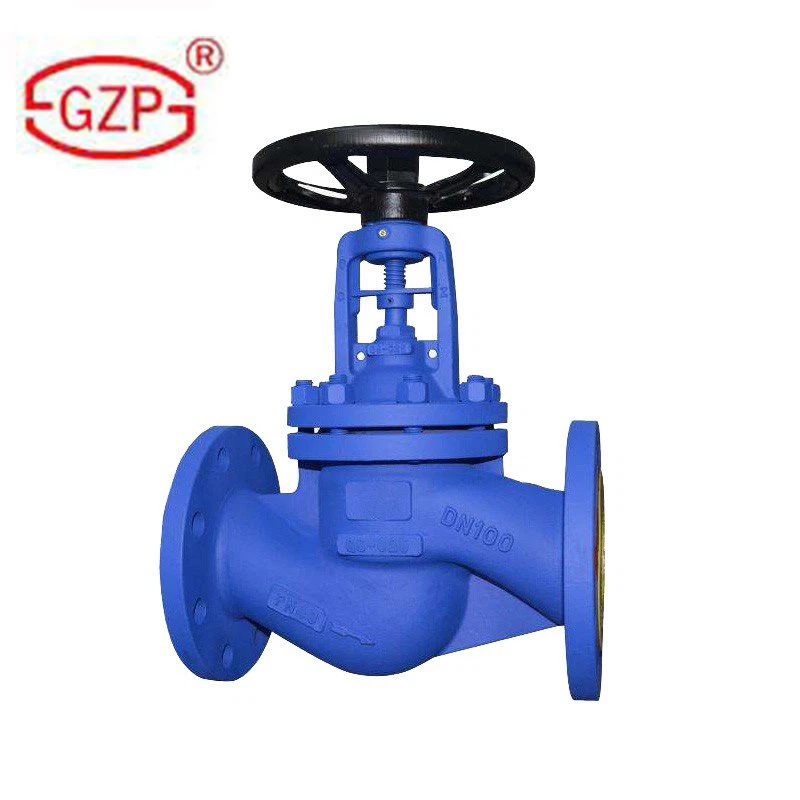
Add to Inquiry Bellow Seal Globe Valve
GZP Bellow Seal Forged Steel Globe Valves are manufactured to the latest edition of EN558-1 and ASME B16.34. And tested to API 598.
Add to Inquiry
Advantages of Globe Valve
Ease of Operation
Globe valves are easy to operate because they only require a quarter turn to open or close. A Handle or a lever attached to the stem opens or closes the valve This makes them ideal for applications where quick operation is necessary, such as in emergency situations.
Maintainability
Operating and maintaining a globe valve is easier than other types of valves. Globe valves have a simple design and few moving parts, which makes them less likely to break down.
Leakage Rate
Globe valves have a lower leakage rate than other types of valves. This is because the disk in a globe valve seats more snugly against the port, which creates a tighter seal.
Versatility
Unlike other types of valves, globe valves are adaptable and can function in a wider range of settings. This is due to the different sizes, materials, and pressure ratings that they come in.
Clog Resistance
Globe valves are less likely to clog than other types of valves. This is because the disk in a globe valve can be easily removed for cleaning.
Long Service Life
They have a long service life of up to 20 years with proper maintenance. They can withstand high pressures and temperatures.
Contamination Resistant
Their design makes them resistant to contamination and fouling. They control fluid flow in a variety of applications, such as regulating pressure, managing temperature, and controlling the level of a liquid.
Types of Globe Valve
Bellow Seal Globe Valve
A Bellows Valve is a specially designed valve suitable for use in industries dealing with a hazardous medium where even minute leakages can be extremely critical. With the exponential growth of new industries such as the chemical and nuclear industry, there is a growing abundance of flammable, hazardous, extremely poisonous, and toxic media flowing through the pipelines.
DIN Globe Valve
Bellows valves eliminate the risk of leakage of the process fluid and are therefore ideally suited for applications where leakage cannot be tolerated from the valves. So, places where highly hazardous materials such as hydrogen, ammonia, chlorine, and other similar poisonous or explosive material are handled, these valves are preferred.
Extend Stem Globe Valve
The forged globe valve with extended stem is mainly for use with cryogenic fluids, wherein the elongated shaft between the valve seal or disk and the actuator is constructed so that rotational movement of the actuator results in linear movement of the shaft, without imparting a large rotational movement of the shaft about its longitudinal axis and with reduced thermal conduction between the mating parts.
Forge Flange Globe Valve
GZP globe valve are widely used in the industries of oil, chemical, medicine-made, fertilizer, electric power, etc. Seat seal surface overlayed with wearing resistant hardened alloy to be matched with disc seal surface; the stem is specially treated to ensure its strength, rigidity, corrosion resistance and abrasion resistance.
Socket Weld Globe Valve
Delivering a globe valve, that is both long-lasting and cost effective, offering solutions that are best suited for industrial and commercial use. Perfect for liquid, gas, steam and water applications, GZP Valve’s forged stainless steel globe valve will withstand the harshest of operating conditions and service environments.
Material of Globe Valve
A popular choice for industrial applications due to its ruggedness and cost-effectiveness. Carbon steel offers a good balance between durability and price, making it suitable for a wide range of globe valve applications where extreme corrosion resistance is not a primary concern. The material is suitable for moderate to high temperatures and pressures, typically up to 800°F (427°C) and 1980 psi (136 bar), depending on the specific grade.
Utilized in less demanding applications, cast iron provides adequate strength for lower pressure and temperature conditions. Its lower cost makes it an attractive option for systems where cost is a significant factor. Cast iron is generally suitable for temperatures up to 450°F (232°C) and pressures up to 250 psi (17.2 bar).
Chosen for environments where corrosion resistance is paramount. Stainless steel is ideal for applications involving aggressive media or in industries such as food processing and pharmaceuticals, where cleanliness and non-reactivity are crucial. Stainless steel can handle temperatures up to 1000°F (538°C) and pressures up to 3000 psi (207 bar), depending on the alloy.
PVC globe valves offer excellent corrosion resistance, are lightweight and cost-effective for handling corrosive materials. However, they are not suitable for high-temperature or high-pressure applications. Also, they have lower mechanical strength and thermal stability compared to metals. PVC is suitable for temperatures up to 140°F (60°C) and pressures up to 232 psi (16 bar).
Forged steel globe valves are ideal for high-pressure and high-temperature applications due to their superior strength and durability. The forging process results in a denser, more uniform material structure, offering enhanced mechanical properties and resistance to impact and thermal fatigue. Forged steel is capable of withstanding temperatures up to 1050°F (566°C) and pressures exceeding 6000 psi (414 bar), depending on the grade.
Application of Globe Valve


Water Treatment Industry
Globe valves are crucial components in water treatment systems. They are used to regulate the flow of water, control pressure, and prevent backflow. In water treatment plants, globe valves are commonly used in the raw water intake system, chemical injection system, and sludge disposal system. They are also used to regulate the flow of water in pipelines, such as in the distribution networks and pumping stations.
Chemical Industry
The chemical industry relies heavily on globe valves to control the flow of various fluids, such as acids, alkalis, and solvents. Globe valves are commonly used in chemical processing plants for controlling the flow of chemicals in pipelines, reactors, and tanks. They are also used to regulate the flow of steam and other gases in the chemical processes. Globe valves are preferred in the chemical industry because they can withstand high temperatures and corrosive environments.
Oil and Gas Industry
Globe valves are widely used in the oil and gas industry for controlling the flow of crude oil, natural gas, and other fluids. They are used in pipelines, refineries, and petrochemical plants. Globe valves are preferred in the oil and gas industry because they can handle high-pressure and high-temperature applications. They are also used to isolate different sections of pipelines and equipment for maintenance and repair.
Power Generation Industry
Globe valves are essential components in power generation plants. They are used to control the flow of steam and water in boilers, turbines, and other equipment. Globe valves are also used to regulate the flow of cooling water in power plants. They are preferred in the power generation industry because they can handle high-pressure and high-temperature applications and are reliable in controlling the flow of fluids.
Food and Beverage Industry
Globe valves are commonly used in the food and beverage industry for controlling the flow of various liquids, such as water, milk, and juices. They are also used to regulate the flow of steam and other gases in food processing plants. Globe valves are preferred in the food and beverage industry because they are easy to clean and maintain and are hygienic.
Components of Globe Valve
Body
The body of the globe valve is the primary pressure-containing structure. It is the most substantial part of the valve and contains all the internal parts that come into contact with the fluid being controlled. The body is connected to the bonnet, which assists in containing the fluid, gas, or slurry.
Bonnet
The bonnet provides a leakproof closure for the valve body. Different types of bonnets can be used in globe valves, including screw-in, union, or bolted bonnets.
Cage
The cage surrounds the plug and is located within the valve body. It is crucial for guiding the plug to the seat of the valve, ensuring a good shutoff, and also plays a significant role in determining the flow within the valve.
Plug or Disc
This is the closure member of the valve. The plug is attached to the stem and can be moved up or down to control the flow of fluid through the valve.
Stem
The stem acts as a connector between the actuator and the plug. It transmits the actuation force from the actuator to the plug, allowing the valve to open or close.
Seat
The seat ring provides a stable and uniform surface for the plug to create a leak-tight seal when the valve is closed. The seats can be screwed in or torqued.

A globe valve is a device whose primary function is to open and close members (valves) that are driven by stems. These valves lift along a surface called the valve seat in order to achieve linear movement.
The typical globe valve operates by using various components that work together (i.e. handwheel, stem, valve body and cover, closure, and packing assembly). The handwheel connects to the valve stem, which in turn drives the valve flap. This reciprocal motion along the direction of the valve seat axis opens or closes the pipeline when it needs to.
Globe valves are widely used and are generally produced in smaller diameters up to DN400 (NPS 16). Larger diameter specifications are only for special pipelines. For example, a large oxygen pipeline may require a large-diameter stainless steel globe valve This is due to the existence of other valves that may cause friction and lead to static fires.
Globe valves are mostly cast due to the complex shape of the flow passages. However, they can also be made from wrought materials for specific applications.
The disc and seat rings that globe valves are cast with are mostly made with bronze. On the other hand, steel-globe valves with temperatures exceeding 350°C have their trim made of stainless steel. This is crucial in providing resistance to seizing and galling. It is vital to heat-treat the valve’s mating faces to derive differential hardness values. Manufacturing globe valves also involves using other trim materials like cobalt-based alloys.
It is also vital to grind the seating surface to achieve full-bearing surface contact during valve closure. An extended disk locknut maintains alignment for lower pressure classes, with disc guides cast into the valve body for higher pressures. Usually, the disc face and seat ring galling are prevented by the disc turning freely on the stem.
The Gate Valve Is Free Spinning
A gate valve has a stem, and if the stem turns and turns for you while not exerting any control over the water flow either way, there’s a good chance that the stem is broken off at the gate or the threads on the stem have been stripped to the point that they no longer operate the way they’re supposed to. Valves are often made from copper and brass, which are soft metals, so they are prone to breaks like that described here. A leak can develop, but even worse, you can’t cut off or reopen the water supply if needed. If this happens to one of the secondary shut off valves, you at least still have the main one, but if it happens to the main one, you should immediately get it repaired or replaced.
The Gate Valve Is Stuck
A gate valve can also become stuck (seized) in either the open or shut position, which means it cannot perform its function correctly and that it might develop a leak. This can happen from lack of use, so you should regularly open and close a valve to make sure it doesn’t become stuck. Make sure to turn off the water, isolate the area to protect from further leaks if leaking has occurred, look for possible causes (wear, corrosion, excessive cold, damaged water line), and place something beneath the valve to catch excess water before you remove or replace it. If you can’t fix the problem on your own (a wrench and some WD-40 might be all you need), then call a professional plumber who will have the tools and the knowledge to get the job done.
Saddle Valves
Older homes and plumbing systems may have saddle valves with handles that look like the letter T. Saddle valves are notoriously vulnerable to leaks, so if you have them in your home or in another building, consider replacing them with regular shut off valves as soon as possible. This might save you from dealing with messy and expensive water damage sooner or later.
The Shut Off Valve Dripping or Leaking Water
When a valve is in the off position for a long period of time and then is turned back on, it probably will drip water. Try tightening the valve’s packing nut and then turn the valve off and back on a few times. If the dripping continues, contact a professional plumber for help.
Burst Pipe
It’s common for a family going on a winter vacation to cut off the water supply and turn down the heat while they’re gone in order to save money and avoid frozen and burst pipes. Many don’t know that when you turn off the water, there can still be water between the shut off valve and the spigot, and that water can freeze, causing the pipe to burst. You won’t notice until you turn the water supply back on, so check for it when you do.
Maintain Your Globe Valves
Start with Proper Installation & Operation
Globe valves work in one direction only. Keep this in mind when you’re installing the valve. Proper installation means less wear and tear on the valve over time. Mount the valve vertically on the pipe with the handwheel pointing up. This puts the working parts of the assembly under less pressure. Never overtighten the handwheel. Overtightening puts added pressure on the gland packing. If there are issues with leaks, it means there’s a problem with the seat or the plug.
Regular Inspection
Set up a regular inspection timetable for your valve systems. How often you do this depends on the type of fluid that the valve is regulating, how much pressure is on the valve, and how often the
valve is cycled during daily operation. When performing regular inspections, check the outside of the valve for signs of wear. If the valve doesn’t operate on a regular basis, cycle the valve at the time of inspection. This keeps the guide from becoming stuck in the seat.
External Globe Valve Maintenance
Check the motion of the stem, which is often the threaded piece exposed to the elements and can easily become dirty or gritty. Lubricate it often to ensure smooth function of the valve. If any of the external hardware (nuts, washers, bolts) show signs of wear, replace them. Tighten the hardware during regular maintenance. Those components tend to loosen with frequent use of the valve. Clean the outer surfaces with a cleaning solution and scrape away any buildup. Ensure that there’s no grease on the handwheel to prevent it from slipping when turned.
Internal Globe Valve Maintenance
Disassemble the valve according to the manufacturer instructions. Then check all of the internal parts for wear and tear. Inspect the interior of the valve body and bonnet and remove any scale or residue buildup. Then check the plug and the seat. Sand down small scratches using an abrasive compound. Or use machine tools to lap down larger scratches. When the valve is shut, it puts pressure on the gland packing, compressing it. Over time, it can become hard and lose its ability to hold pressure. Replace the gland packing if this happens.
Our Certifications
CE, ISO9001, API 6D, ISO14000, ISO18000


Ultimate FAQ Guide to Globe Valve
We're well-known as one of the leading globe valve manufacturers and suppliers in China. If you're going to buy high quality globe valve at competitive price, welcome to get more information from our factory.
globe valve 2 inch, gate globe check valves, 24 globe valve