
Latest Products


Contact Us
- No.97, 4th Avenue, Binhai Economic and Technology Development Zone, Wenzhou, China
- sales@gzp-valve.com
- +86-577-85859689
Your Professional PLUG Valve Supplier
Our company owns a full set of equipment,complete processing and testing methods.The establishing of CAD valve design center and three-dimensional simulated manufacturing experimental design system ensures that new products with high quality can be developed promptly.Implementing perfect quality assurance system,our company is making unremitting endeavor for obtaining API certification on the passing ISO 9001, CE, API 6D International Quality Certification.
Reliable Product Quality
Implementing perfect quality assurance system,our company is making unremitting endeavor for obtaining API certification on the passing ISO 9001, CE, API 6D International Quality Certification.
Wide Product Range
Types of products include gate valve , globe valve, ball valve, check valve,plug valve,metal sealing butterfly valve as well as high temperature and high pressure power station special valve.
Advanced Equipment
Our company owns a full set of equipment,complete processing and testing methods.The establishing of CAD valve design center and three-dimensional simulated manufacturing experimental design system ensures that new products with high quality can be developed promptly.
Excellent Customer Service
We guarantee to reply clients within 24 hours and solve your problems in the first time with phone call. We offer field service and technical training upon request and can appoint specialists to clients' sites for installation, instruction, and usage assistance if request.
What is PLUG Valve?
Plug valves are valves with cylindrical or conically tapered "plugs" which can be rotated inside the valve body to control flow through the valve. The plugs in plug valves have one or more hollow passageways going sideways through the plug, so that fluid can flow through the plug when the valve is open. Plug valves are simple and often economical.
 Eccentricl PLUG Valve
The eccentric plug valve was first standardized in MSS [Manufacturers Standardization Society] Standard SP-108 in 1991.
Add to Inquiry Metal To Metal Seat PLUG Valve
GZP metal seated plug valves are designed to be used for high or low temperature. prevent line leakage, and also prevent stem leakage to assure no external leakage into the atmosphere.
Add to Inquiry Jacketed Three-Way PLUG Valve
3-Way Plug Valve is used for flow diversion for Water, Wastewater, Sewage and Bio Gas applications.. 3” – 16”/DN80 – DN400.
Add to Inquiry Jacket PLUG Valve PTFE
Body Material: CF 8M, CF 3M, CF8, WCB. Plug: CF 8M, CF 3M, CF8, WCB. Sleeve: PTFE
Add to Inquiry DBB PLUG Valve
GZP integrity double block and bleed expanding plug valves for product isolation, blending, metering, custody transfer, fueling operations, terminal, storage and other land or offshore zero leakage
Add to Inquiry Sleeve PLUG Valve
Design: API 6D, API599 . Pressures range: ANSI 150 ~ANSI 900 ,PN10~PN150. Size range: DN50(2) ~DN350 (14)
Add to Inquiry Cast Steel PLUG Valve
Southern California Valve Lubricated Type Plug Valves are available in Short, Regular, and Venturi Pattern. The different patterns vary as regards end to end dimension and port area for a given size
Add to Inquiry Pressure Balance Lubricated PLUG Valve
High Mpa Valve Group manufactures some of the most dependable cast and forged steel Pressure Balance Lubricated Valves in the industry.
Add to Inquiry Lubricated PLUG Valve
Plug Valve-API 6D. Short Pattern. Regular Pattern. Venturi Pattern
Add to Inquiry API PLUG Valve
Design|: API 6D, API599 . Pressures range: ANSI 150 ~ANSI 900 ,PN10~PN150. Size range: DN50(2) ~DN350 (14)
Add to Inquiry
Advantages of PLUG Valve
Allows for Minimal Flow Restriction
Plug valves feature a full port design. This means that the opening through the valve is the same size as the pipeline. As a result, they allow for maximum flow capacity and minimal flow restriction. It makes them ideal for applications where a low-pressure drop is critical. Additionally, the full port design of plug valves can also help to reduce the risk of fluid turbulence and erosion within the valve. This prevents wear and damage to the valve, improving longevity.
Prevents Leakages and Spillages
Leaks and spills can not only be costly but also hazardous. Luckily, you can use plug valves to stop the issue. When you close a plug, it forms a tight seal with the valve body. With a tight shut-off, plug valves can completely stop the flow of fluid through a pipeline. This can help prevent leakage in pipelines.
Durable
Designed to be long-lasting, plug valves can withstand high pressures and temperatures. Since they have a simple and robust design, it reduces the number of moving parts and potential failure points. Plug valves are also resistant to wear and corrosion. This makes them ideal for use in harsh industrial environments.
Ease of Maintenance and Operation
Plug valves have a simple design. With fewer moving parts compared to other valves, they are easy to maintain and repair. You can easily disassemble them to inspect and fix any issues. The simple design of plug valves also makes them easier to operate. This can be especially important in applications where you need to operate the valve manually. As a result, it can reduce the risk of operator error or misalignment.
Offers Great Versatility
Plug valves are versatile in terms of the fluids they can handle. They can control the flow of a variety of fluids, including gases, liquids, and slurries. You can also use them with fluids that may be corrosive or abrasive since they’re available in different materials for construction. Regarding pressure capabilities, plug valves can also be designed to operate in a wide range of conditions. They can handle pressures up to several thousand pounds per square inch (psi), depending on the specific valve design and materials used.
Types of PLUG Valve
Lubricated Plug Valve
Lubricated plug valves incorporate small channels in the plug construction called radial holes that allow for the flow of a lubricant. The lubricant works along the length of the plug and on its seating surface. Because of the lubricant, the closing, opening, and throttling of a lubricated plug valve is made easier. Similarly, the lubricated plug valve prevents corrosion in the valve and promotes proper seating when closed.
Non-lubricated Plug Valve
Non-lubricated plug valves typically find use in low-pressure systems. Unlike the lubricated plug valve, non-lubricated plug valves have no form of automatic lubrication and are more prone to deterioration and wear. Due to this, non-lubricated valves are cheaper than their lubricated counterparts. This lends non-lubricated valves to best fit applications with small actuator torque requirements.
Multi-Port Plug Valve
Multiport plug valves control the direction of flow in a system with specified plug cavities. Typically, multiport valves have more than two openings, yet flow is constrained to only two ports. Because of this, the plug design in a multiport plug valve is the biggest design factor to be considered.
Eccentric Plug Valve
Eccentric plug valves follow an eccentric path when operating the plug, meaning the plug is offset from the centerline of the seating ring. The plug in an eccentric plug valve contacts the seating ring only in the closed position. The open eccentric plug is not in contact with the seating ring when the valve is open.
Application of PLUG Valve


Asphalt and bitumen industries
Plug valves are a popular choice in the asphalt and bitumen industries due to their robust design and ability to handle the challenging conditions involved. Plug valves provide excellent sealing, preventing leaks of the highly viscous and often hot materials. They can be can be operated quickly and easily, even with gloves on, which is important in harsh industrial environments. Available in various port configurations (2-way, 3-way, etc.), they can handle a wide range of applications.
Oil piping systems
Plug valves are extensively used in oil piping systems, where they play a crucial role in regulating the flow of crude oil, refined products, and various petroleum derivatives. These valves are well-suited for handling the high pressures and demanding conditions commonly encountered in oil pipelines. Their ability to provide a tight shut-off and withstand abrasive particles makes them ideal for controlling the flow of oil and ensuring the efficient operation of oil transportation networks.
High-pressure & extreme temperature flow systems
Plug valves excel in high-pressure and extreme temperature flow systems, such as those found in power plants, refineries, and industrial processes. These valves are designed to handle the challenging conditions often associated with such applications. With their robust construction and reliable sealing mechanisms, plug valves can effectively manage the flow of fluids under elevated pressures and temperature extremes, ensuring safe and efficient operation in demanding environments.
Chemical servicing
In chemical processing industries, plug valves are widely employed to control the flow of various chemicals, acids, and corrosive substances. The materials used in plug valves can be selected to resist chemical attacks and provide excellent corrosion resistance. Their ability to handle aggressive media and provide a tight seal makes them invaluable in chemical servicing applications, protecting equipment and ensuring precise control over the flow of chemicals in diverse processes.
Corrosive substances processing
Whether in the pharmaceutical, petrochemical, or water treatment industries, plug valves can effectively manage corrosive fluids while maintaining a reliable seal. Their resistance to corrosion and ability to withstand aggressive environments make them a preferred choice for applications where corrosion is a significant concern, safeguarding the integrity of the system and ensuring the efficient processing of corrosive substances.
Components of PLUG Valve
Body
The main structure that houses the plug and provides connection points for piping.
Seats
The surfaces against which the plug seals when closed, preventing leakage.
Seals and Bearings
Ensure tight sealing and smooth operation of the plug within the valve body.
Plug
The rotating element that controls flow.
Stem
Connects the plug to the actuator and facilitates plug rotation.
Actuator
Mechanism for manually or automatically operating the plug.
The Difference Between Plug Valves and Ball Valves
The major difference in the body structure of plug and ball valves is the shape of the internal member that controls the flow of fluid or gas through the valve. In a plug valve, the member is a conical or cylindrical plug with bored passages running through it, while in a ball valve, the member is a spherical ball with a hollow centre. This difference in disc shape affects how the valves operate and their suitability for different applications.
The operating mechanisms of the two valves differ because of their distinct body structures. A plug valve operates by rotating the cylindrical-shaped plug within the valve body. When the plug is rotated to the open position, the bored passages within the plug line up with the inlet and outlet ports, allowing fluid to flow through the valve. When the plug is rotated to the closed position, it presses against the valve seat, creating a tight seal that prevents the fluid from passing through the valve.
On the other hand, when a ball valve is closed, the spherical ball is pressed tightly against the valve seat, providing a tight shut-off to prevent any fluid from flowing through it. When it opens, the bore of the ball lines up with the inlet and outlet ports, allowing the fluid or gas to pass through the valve.
The unique mechanism of the plug valves effectively wipes away any suspended particles in the fluid as the plug rotates, preventing them from accumulating and causing blockages. As a result, they are highly effective in handling abrasive slurries and other fluids containing solid particles, such as in wastewater treatment and mining operations.
In contrast, ball valves are often preferred due to their compact size and cost effectiveness. They also have the advantage in applications where frequent operation is required. This is because the valve’s quick quarter-turn operation allows for easy and fast opening and closing, which can help reduce downtime and improve efficiency. Additionally, ball valves are often used in environments where high pressure and high temperature are present, making them ideal for use in the oil and gas industry.
Plug valves are generally considered to be low-maintenance valves due to their simple design and few moving parts. However, lubricated type plug valves do require periodic lubrication to ensure proper operation and prevent sticking or seizing.
Ball valves may require periodic cleaning to remove any buildup of debris or sediment, as well as inspection of the valve seats and ball for wear or damage. Depending on the application and operating conditions, ball valves may also require the replacement of the stem packing or other components to maintain proper sealing and prevent leaks.
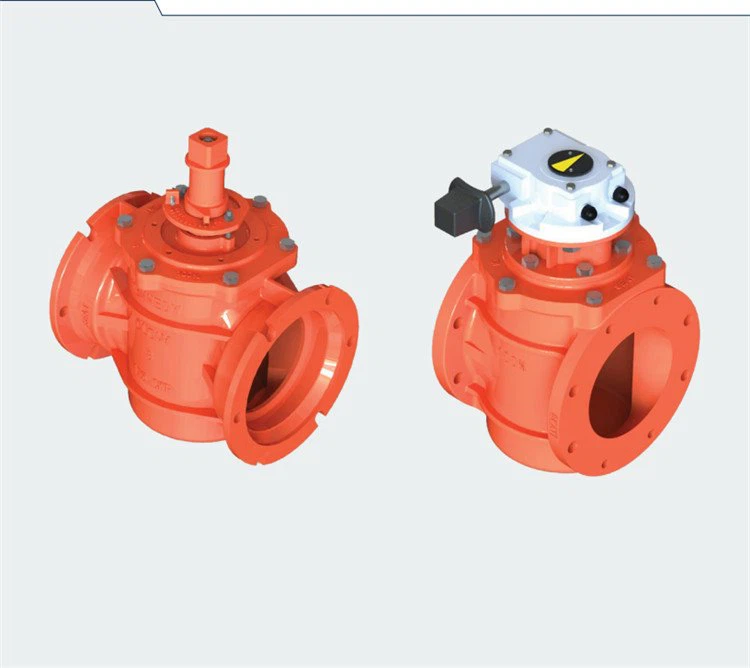
Plug valves work by using a cylindrical or tapered plug with a hole in the center to control the flow of fluid or gas through a pipeline.
The valve body of a plug valve often consists of two or more ports—an inlet and an outlet with the plug located in between. The plug is connected to a stem that extends outside the valve body, which is used to rotate the plug.
When you rotate the plug so that the hole is perpendicular to the flow direction, the valve is in the closed position.
This means the fluid flow is blocked. Rotating the plug 90 degrees in the other direction can open the valve, allowing liquid to flow.
The operation of plug valves can be manual or automated, depending on your specific application requirements.
To prevent damage to the plug valve and to ensure the valve’s reliable operation, the following factors should be considered during installation:
When the Plug Valve is installed in a horizontal line, the preferred installation is with a plug rotating 90’ upward to open. Utilizing this orientation can lessen the effect of solids preventing plug operation.
When it is installed in high-pressure systems, it is recommended to have the plug seat on the outlet side of the valve.
When the valve is installed in a vertical line where solids exist, the seat is ideally positioned up, preventing solid build-up in the valve body.
Make sure the valve is open. First, heat up the pipeline and transfer as much heat as possible from the pipe to the valve. Avoid extending the heating time of the plug valve itself.

Make a valve system map
Make a system map that presents the location of all your valves. Give numbers to the valves on the map, and then make a guidebook that shows the Plug valve type, size, location description, and related notes. Some companies already demand this, in that case, verify the information and add unlisted valves. In the event of an emergency, this system map may save lives and time.
Keep the correct grease gun fittings
Various valve styles often require separate grease or lubrication fittings. For example, a plug valve may need a lube stick injection fitting or a “tall” giant button head fitting. These are sometimes known as “lube screws” and have either an NPSM thread down or a coarse bolt thread down. A perfect maintenance exercise is to have available spare fittings of each type in your toolkit.
Lubricate the plug of the Plug Valve
The main seal in older lubricate plug valves is metal-to-metal between the plug and valve body. When pressure is the employee to the valve through the lubrication fitting, it makes up in the lube sealant reservoir under the plug, eventually “lifting” the plug and forcing it away from the metal-to-metal seal. At this moment, the lube sealant slides up and around the plug, lubricating it and forming an inner seal between the plug and the valve body.
Use the best lube sealant for the application
Valve lubricants must play the role of valve sealants, and sealants must also perform as lubricants to do their job correctly. Due to their dual purposes, we generally refer to them as lube sealants. To determine the best lube sealant for your application, you should keep the following points:
● Determine the temperature range of the lube sealant.
● The lube sealant will be faced the pressure.
● Find out if there is any CO2 or H2S present. If so, in what concentrations?
● Find out if there is any water present. If so, how much?
● Check whether there are any other contaminants that cause concern.
How to Choose the Right Plug Valves
Fluid Type
The type of fluid being handled (liquid, gas, slurry) and its properties (corrosiveness, abrasiveness) will influence material selection for the plug, seat, and body.
Flow Rate and Direction
Consider the required flow rate and whether bi-directional flow is necessary. Full-bore valves may be preferred for high flow rates.
Cost
Balance the initial cost of the valve with its performance, maintenance requirements, and expected lifespan.
Pressure and Temperature Rating
The valve’s pressure and temperature ratings must exceed the maximum operating conditions of the pipeline.
Maintenance Requirements
Consider the ease of maintenance and access to the valve for potential repairs.
Operation
Evaluate the frequency of operation (on/off or throttling) and choose a valve design suitable for the intended use.
Our Certifications
CE, ISO9001, API 6D, ISO14000, ISO18000


Ultimate FAQ Guide to PLUG Valve
We're well-known as one of the leading plug valve manufacturers and suppliers in China. If you're going to buy high quality plug valve at competitive price, welcome to get more information from our factory.
Half Full Jacket PLUG Valve PTFE, Eccentricl PLUG Valve