


As an ASME B16.5 RTJ (Ring Type Joint) flange supplier, I often get asked whether there are international equivalents to this widely recognized standard. The ASME B16.5 standard, established by the American Society of Mechanical Engineers, governs pipe flanges and flanged fittings from NPS 1/2 through NPS 24 for ratings Class 150 to Class 2500. RTJ flanges, a specific type within this standard, are known for their high-pressure applications and excellent sealing capabilities.
The Significance of ASME B16.5 RTJ
Before delving into international equivalents, it's crucial to understand the importance of ASME B16.5 RTJ flanges. These flanges are designed to create a tight, leak - proof seal in high - pressure and high - temperature applications, such as in the oil and gas, petrochemical, and power generation industries. The RTJ design features a circular groove in the flange face where a metal ring gasket is seated. When the flanges are bolted together, the ring gasket deforms, creating a seal that can withstand extreme conditions.
International Standards and Their Comparison
European Standards (EN)
In Europe, the EN 1092 - 1 standard is one of the most prominent for flanges. It covers steel flanges for pipes, valves, fittings, and accessories. While it has a wide range of flange types, including those for high - pressure applications, the design and dimensions of EN 1092 - 1 flanges are not directly equivalent to ASME B16.5 RTJ flanges.
The EN 1092 - 1 standard uses different pressure ratings and flange dimensions. For example, the pressure ratings are expressed in PN (Pression Nominale) values, which are not directly comparable to the ASME Class ratings. Additionally, the flange face designs in EN 1092 - 1 are diverse, including flat face (FF), raised face (RF), and ring joint face (RJ), but the RJ face in EN 1092 - 1 has different groove dimensions and tolerances compared to ASME B16.5 RTJ.
Suppose a European company is looking to replace an ASME B16.5 RTJ flange in their system. In that case, they can't simply swap it with an EN 1092 - 1 RJ flange without careful consideration of the system's pressure, temperature, and fluid media.
Japanese Standards (JIS)
The Japanese Industrial Standards (JIS) for flanges, such as JIS B2220, also have their own characteristics. JIS flanges are designed to meet the requirements of the Japanese market and industries. Similar to the EN standard, JIS B2220 has different pressure ratings (expressed in K values) and flange dimensions compared to ASME B16.5.
The sealing mechanisms and face designs in JIS flanges are not identical to ASME B16.5 RTJ. While JIS does have some flanges for high - pressure applications, the ring joint design in JIS B2220 may not match the performance requirements of an ASME B16.5 RTJ flange. So, when dealing with international projects that involve Japanese and American standards, careful engineering analysis is necessary to ensure compatibility.

Chinese Standards (GB)
In China, the GB/T 9112 - 2010 series of standards govern steel pipe flanges. Like other international standards, the pressure ratings and dimensions in GB standards are different from ASME B16.5. Chinese flanges are designed to meet the domestic industrial needs, and there are differences in flange face types, bolt hole patterns, and material specifications.
Although there are ring joint flanges in GB standards, they are not direct equivalents to ASME B16.5 RTJ flanges. For example, the groove dimensions and the way the ring gasket is designed to interact with the flange face may vary, which can affect the sealing performance in high - pressure applications.
Applications and Compatibility Considerations
When it comes to choosing between ASME B16.5 RTJ and its international counterparts, application is a key factor. In the global oil and gas industry, many projects are still based on the ASME standards due to their long - standing reputation and wide acceptance in North America, the Middle East, and some parts of Asia.
However, in some regions where local standards are more prevalent, there may be a preference for using local flange standards. For example, in Europe, the EN standards are widely used in domestic and regional projects. In such cases, if a project involves international partners or equipment integration, compatibility issues need to be addressed.
It's also important to consider the specific requirements of the application, such as fluid compatibility, pressure, and temperature. An ASME B16.5 RTJ flange is designed to work with specific types of fluids and under certain pressure and temperature limits. When considering an international equivalent, it's essential to ensure that the alternative flange can meet the same performance requirements.
Other Flange Types and Standards in the ASME Range
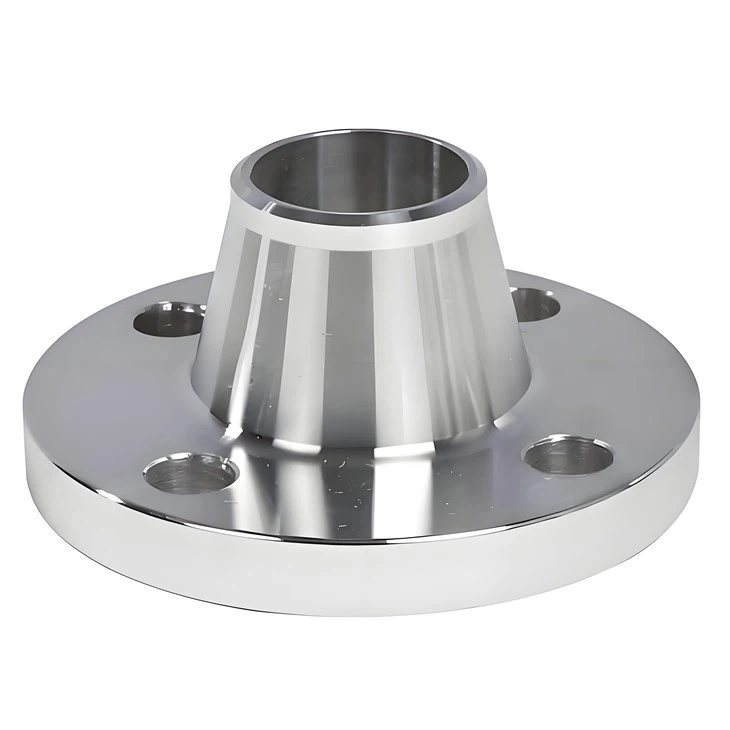
As an ASME B16.5 RTJ supplier, I also deal with other related flange types within the ASME standards. For instance, Weld Neck Flange (WN) is another popular type defined by ASME B16.25. Weld neck flanges are known for their excellent structural integrity and are commonly used in high - pressure and high - temperature applications.
The RF Flange NPS 1/2~NPS24 is a raised - face flange that is part of the ASME B16.5 standard. It is widely used in various industries due to its versatility and relatively easy installation. And if you are looking for larger - size RF flanges, the RF Flange NPS 26~NPS60 as defined by ASME B16.47 might be the right choice.
Conclusion and Call to Action
In conclusion, while there are international flange standards in existence, there are no direct equivalents to ASME B16.5 RTJ flanges. The differences in pressure ratings, dimensions, face designs, and material specifications make it necessary to perform a detailed engineering assessment when considering a replacement or alternative.
If you are in the market for high - quality ASME B16.5 RTJ flanges or other related flanges such as weld neck flanges, RF flanges of different sizes, I am here to assist you. I have a deep understanding of the standard and can provide you with the most suitable products for your specific applications. Whether you are working on an international project or a domestic one, I can offer professional advice on flange selection and compatibility. Contact me to start a procurement discussion and find the best flange solutions for your needs.
References
- ASME B16.5 - Pipe Flanges and Flanged Fittings
- EN 1092 - 1 - Flanges and their joints - Circular flanges for pipes, valves, fittings and accessories, PN designated - Part 1: Steel flanges
- JIS B2220 - Steel pipe flanges
- GB/T 9112 - 2010 - Steel pipe flanges