


Hey there! As a supplier of ASME B16.5 RF flanges, I often get asked if these flanges can be used in high - temperature environments. So, I thought I'd write this blog to share my insights on the matter.
First off, let's quickly go over what ASME B16.5 RF flanges are. The ASME B16.5 standard is a widely recognized specification for pipe flanges and flanged fittings in the United States. The "RF" stands for Raised Face, which is a common type of flange face. These flanges come in various sizes, from RF Flange NPS 1/2~NPS24, and are used in a whole bunch of industries, like oil and gas, chemical processing, and power generation.
Now, back to the main question: Can they be used in high - temperature environments? Well, the answer isn't a simple yes or no. It depends on a few factors.
Material Selection
The material of the flange plays a huge role in its performance at high temperatures. ASME B16.5 RF flanges are available in different materials, such as carbon steel, stainless steel, and alloy steel.
Carbon steel flanges are pretty common and cost - effective. But they have their limitations when it comes to high temperatures. Generally, carbon steel starts to lose its strength at around 400 - 450°C (752 - 842°F). As the temperature rises, the steel can become softer, which might lead to flange deformation and potential leakage. So, for applications where the temperature goes much above this range, carbon steel might not be the best choice.
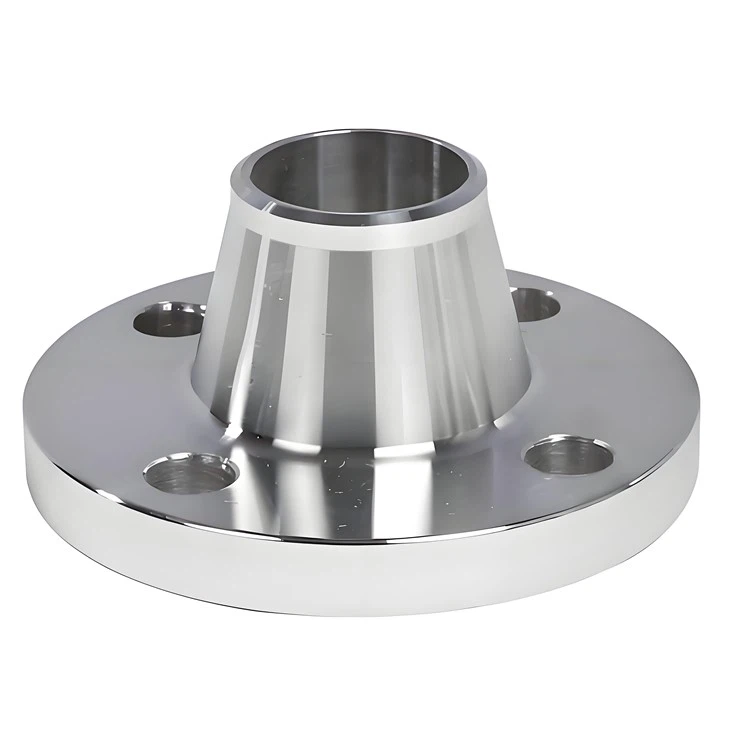

Stainless steel flanges, on the other hand, are a better option for high - temperature environments. Austenitic stainless steels, like 304 and 316, can handle temperatures up to about 800 - 900°C (1472 - 1652°F). They have better corrosion resistance and maintain their strength at higher temperatures compared to carbon steel. However, they are more expensive.
Alloy steel flanges are designed to offer even better high - temperature performance. They contain elements like chromium, molybdenum, and vanadium, which enhance their strength and resistance to oxidation at elevated temperatures. Some alloy steel flanges can withstand temperatures well above 900°C (1652°F), making them suitable for extremely high - temperature applications.
Design and Engineering Considerations
Apart from the material, the design and engineering of the flange also matter. For high - temperature applications, factors like flange thickness, bolt size, and gasket selection are crucial.
A thicker flange can better withstand the thermal stresses caused by high temperatures. It provides more structural integrity and reduces the risk of deformation. The bolts used to connect the flanges also need to be able to handle the temperature. High - strength bolts made from heat - resistant materials are often used in high - temperature installations.
Gasket selection is another important aspect. In high - temperature environments, traditional gaskets might not work well. You need gaskets that can maintain their sealing properties at elevated temperatures. For example, spiral - wound gaskets made with graphite filler are a popular choice for high - temperature applications because they can handle temperatures up to around 550°C (1022°F) depending on the specific materials used.
Comparison with Other Flange Types
It's also worth comparing ASME B16.5 RF flanges with other types of flanges in high - temperature scenarios. Take ASME B16.5 RTJ (Ring Type Joint) flanges, for instance. RTJ flanges are designed for high - pressure and high - temperature applications. They use a metal ring gasket that fits into a groove on the flange face. This design provides a better seal at high temperatures and pressures compared to RF flanges. However, RTJ flanges are more expensive and require more precise installation.
Weld Neck Flange is another option. Weld neck flanges are welded to the pipe, which gives them better structural integrity. They are often used in high - temperature and high - pressure applications because the welding provides a strong connection that can withstand thermal stresses.
Case Studies and Real - World Applications
In the real world, there are many examples of ASME B16.5 RF flanges being used in high - temperature environments. In some power plants, carbon steel RF flanges are used in areas where the temperature doesn't exceed the limit for carbon steel. For example, in the low - temperature sections of a steam cycle.
In the chemical industry, stainless steel and alloy steel RF flanges are commonly used in high - temperature reactors and distillation columns. These flanges are carefully selected based on the specific temperature and pressure requirements of the process.
Conclusion
So, to sum it up, ASME B16.5 RF flanges can be used in high - temperature environments, but it all boils down to proper material selection, design, and engineering. If you're in an industry that requires high - temperature applications, it's important to work with a knowledgeable supplier who can help you choose the right flange for your needs.
As a supplier of ASME B16.5 RF flanges, I'm here to assist you in making the best decision. Whether you need a carbon steel flange for a moderately high - temperature application or an alloy steel flange for an extremely high - temperature process, I can provide you with high - quality products. If you're interested in learning more or making a purchase, feel free to reach out and we can start a discussion about your specific requirements.
References
- ASME B16.5 Standard for Pipe Flanges and Flanged Fittings
- "Handbook of Piping Design" by John P. Carr
- "Materials Science and Engineering: An Introduction" by William D. Callister Jr. and David G. Rethwisch