



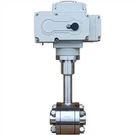
Calculating the flow coefficient of a 3 way ball valve is a crucial aspect for many industries that rely on precise fluid control. As a 3 Way Ball Valve supplier, I understand the importance of this parameter and its impact on the overall system performance. In this blog post, I will guide you through the process of calculating the flow coefficient of a 3 way ball valve, providing you with the necessary knowledge to make informed decisions for your applications.


Understanding the Flow Coefficient (Cv)
The flow coefficient, denoted as Cv, is a measure of a valve's capacity to pass fluid. It is defined as the number of US gallons per minute (GPM) of water at 60°F that will flow through a valve with a pressure drop of 1 psi across the valve. In other words, the higher the Cv value, the more fluid a valve can pass for a given pressure drop.
The flow coefficient is an important parameter because it allows engineers and designers to select the appropriate valve size for a specific application. By knowing the required flow rate and pressure drop, they can calculate the necessary Cv value and choose a valve that meets or exceeds this requirement.
Factors Affecting the Flow Coefficient of a 3 Way Ball Valve
Several factors can affect the flow coefficient of a 3 way ball valve. These include:
- Valve Size: Larger valves generally have higher Cv values because they offer less resistance to flow. As the valve size increases, the cross-sectional area through which the fluid can flow also increases, allowing for a greater flow rate.
- Ball Port Size: The size of the ball port, which is the opening in the ball through which the fluid passes, also affects the Cv value. A larger ball port will result in a higher Cv value because it allows more fluid to flow through the valve.
- Valve Design: Different valve designs can have different flow characteristics, which can affect the Cv value. For example, a full port ball valve, which has a ball port that is the same size as the pipe diameter, will generally have a higher Cv value than a standard port ball valve, which has a smaller ball port.
- Fluid Properties: The properties of the fluid being controlled, such as its viscosity and density, can also affect the Cv value. Viscous fluids will require more energy to flow through the valve, resulting in a lower Cv value compared to less viscous fluids.
Calculating the Flow Coefficient of a 3 Way Ball Valve
The flow coefficient of a 3 way ball valve can be calculated using the following formula:
[ C_v = \frac{Q}{\sqrt{\Delta P}} ]
Where:
- ( C_v ) is the flow coefficient in GPM/√psi.
- ( Q ) is the flow rate in GPM.
- ( \Delta P ) is the pressure drop across the valve in psi.
To use this formula, you need to know the flow rate and pressure drop across the valve. The flow rate can be measured using a flow meter, while the pressure drop can be measured using pressure gauges installed upstream and downstream of the valve.
Let's take an example to illustrate how to calculate the flow coefficient of a 3 way ball valve. Suppose you have a 3 way ball valve with a flow rate of 50 GPM and a pressure drop of 2 psi across the valve. Using the formula above, we can calculate the Cv value as follows:
[ C_v = \frac{50}{\sqrt{2}} \approx 35.36 ]
So, the flow coefficient of this 3 way ball valve is approximately 35.36 GPM/√psi.
Importance of Accurate Flow Coefficient Calculation
Accurately calculating the flow coefficient of a 3 way ball valve is essential for several reasons:
- Proper Valve Selection: By calculating the required Cv value for your application, you can select a valve that is the right size and has the appropriate flow characteristics. This will ensure that the valve can handle the required flow rate and pressure drop, preventing issues such as cavitation, noise, and excessive wear.
- System Efficiency: A valve with the correct Cv value will operate more efficiently, reducing energy consumption and operating costs. By minimizing the pressure drop across the valve, you can ensure that the fluid can flow through the system with less resistance, resulting in a more efficient operation.
- System Performance: The flow coefficient directly affects the performance of the overall system. By selecting a valve with the appropriate Cv value, you can ensure that the system operates within the desired parameters, providing reliable and consistent performance.
How We Can Help as a 3 Way Ball Valve Supplier
As a 3 Way Ball Valve supplier, we offer a wide range of high-quality 3 way ball valves with different sizes and Cv values to meet your specific requirements. Our valves are designed and manufactured to the highest standards, ensuring reliable and efficient performance.
We also have a team of experienced engineers and technical experts who can assist you in calculating the flow coefficient of the valve for your application. They can provide you with the necessary guidance and support to ensure that you select the right valve for your needs.
If you are interested in learning more about our 3 way ball valves or need assistance with calculating the flow coefficient, please feel free to contact us. We would be happy to discuss your requirements and provide you with a customized solution.
Conclusion
Calculating the flow coefficient of a 3 way ball valve is an important step in ensuring the proper selection and operation of the valve in your application. By understanding the factors that affect the Cv value and using the appropriate formula, you can accurately calculate the required Cv value and select a valve that meets your needs.
As a 3 Way Ball Valve supplier, we are committed to providing our customers with high-quality products and excellent service. If you have any questions or need further assistance, please do not hesitate to contact us. We look forward to working with you to meet your fluid control needs.
References
- Crane Company. (1988). Flow of Fluids Through Valves, Fittings, and Pipe. Technical Paper No. 410M.
- Spirax Sarco. (2015). Control Valves: Sizing and Selection. Engineering Manual.