




Selecting the right actuator for an API PLUG Valve is crucial, as it can significantly impact the valve's performance, efficiency, and overall lifespan. As an API PLUG Valve supplier, I've seen firsthand how the wrong actuator choice can lead to operational headaches and increased costs. In this blog, I'll share some tips on how to make the right decision when choosing an actuator for your API PLUG Valve.
Understanding the Basics of API PLUG Valves
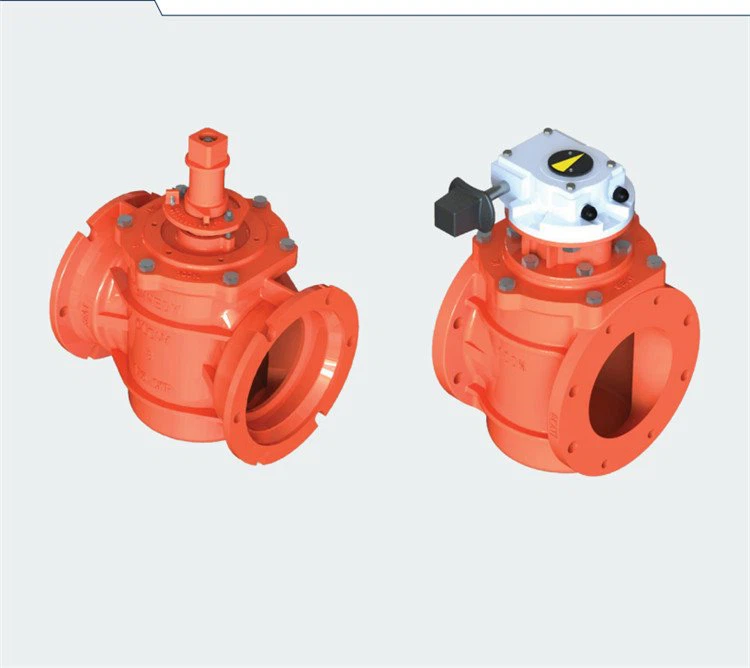
Before diving into actuator selection, let's quickly go over what API PLUG Valves are. These valves are designed to control the flow of fluids in a pipeline. They come in various types, like the Eccentricl PLUG Valve, Cast Steel PLUG Valve, and Metal To Metal Seat PLUG Valve. Each type has its own unique features and is suitable for different applications.
Factors to Consider When Selecting an Actuator
1. Valve Size and Torque Requirements
The size of your API PLUG Valve plays a big role in actuator selection. Larger valves generally require more torque to operate. You need to know the torque requirements of your specific valve. This info can usually be found in the valve's technical documentation. If you're not sure, you can always reach out to us, and we'll help you figure it out.
For instance, a small-sized API PLUG Valve might need a relatively low-torque actuator, while a large Cast Steel PLUG Valve used in industrial applications will need a high-torque actuator to open and close smoothly.
2. Operating Environment
The environment where the valve will be used is another important factor. Is it a harsh industrial setting with high temperatures, corrosive chemicals, or a lot of dust? Or is it a more controlled environment like a water treatment plant?
In a corrosive environment, you'll want an actuator that's made of corrosion-resistant materials. For high-temperature applications, the actuator should be able to withstand the heat without losing its performance. For example, in a chemical processing plant, a Metal To Metal Seat PLUG Valve paired with a corrosion-resistant actuator would be a good choice.
3. Control Requirements
How do you want to control the valve? Do you need manual control, or is automated control more suitable for your application? Manual actuators are simple and cost-effective for applications where the valve doesn't need to be operated frequently. However, if you need precise control and frequent operation, an automated actuator is the way to go.
Automated actuators can be further classified into electric, pneumatic, and hydraulic actuators. Electric actuators are easy to install and can be controlled remotely. Pneumatic actuators are fast and reliable, and they're commonly used in industrial applications. Hydraulic actuators are powerful and can handle high-torque requirements, but they're more complex and expensive.
4. Speed of Operation
The speed at which the valve needs to open and close is also a consideration. Some applications require fast operation, like in emergency shutdown systems. In these cases, you'll need an actuator that can provide quick response times.
On the other hand, if the valve is used in a process where slow and steady operation is more important, you can choose an actuator with a slower speed. For example, in a water distribution system, a slower-acting actuator might be sufficient.
5. Cost
Of course, cost is always a factor. You need to balance the performance and features you need with your budget. While it might be tempting to go for the cheapest option, remember that a low-quality actuator can end up costing you more in the long run due to maintenance and replacement costs.
We offer a range of actuators at different price points, so you can find one that meets your requirements without breaking the bank.
Types of Actuators and Their Suitability for API PLUG Valves
1. Manual Actuators
Manual actuators are the simplest type. They're operated by hand, usually with a lever or a handwheel. They're great for small valves that don't need to be operated frequently. They're also very cost-effective and easy to maintain.
However, they're not suitable for large valves or applications where quick operation is required. If you have a small Eccentricl PLUG Valve in a non-critical application, a manual actuator might be a good choice.
2. Electric Actuators
Electric actuators are popular because they're easy to install and control. They can be powered by a standard electrical supply, and they can be integrated with control systems for automated operation.
They're suitable for a wide range of applications, from small residential valves to large industrial valves. They offer precise control and can be programmed to operate at specific times or in response to certain conditions. However, they might not be the best choice for applications where there's a risk of power failure.
3. Pneumatic Actuators
Pneumatic actuators use compressed air to operate. They're fast, reliable, and can provide high torque. They're commonly used in industrial applications where quick operation is required.
They're also relatively simple and easy to maintain. However, they require a source of compressed air, which can add to the overall cost. If you have a large Cast Steel PLUG Valve in an industrial setting, a pneumatic actuator might be a good option.
4. Hydraulic Actuators
Hydraulic actuators are the most powerful type. They use hydraulic fluid to generate high torque. They're suitable for large valves and applications where high force is required, like in heavy industrial machinery.
However, they're more complex and expensive than other types of actuators. They also require a hydraulic power unit, which adds to the installation and maintenance costs.

Making the Right Choice
Selecting the right actuator for your API PLUG Valve is a decision that shouldn't be taken lightly. It requires careful consideration of all the factors mentioned above. If you're still unsure, don't hesitate to contact us. We have a team of experts who can help you choose the best actuator for your specific application.
We understand that every customer's needs are different, and we're committed to providing the best solutions. Whether you need a small Eccentricl PLUG Valve with a manual actuator or a large Metal To Metal Seat PLUG Valve with a high-torque hydraulic actuator, we've got you covered.
Conclusion
In conclusion, choosing the right actuator for your API PLUG Valve is essential for optimal performance and efficiency. By considering factors like valve size, operating environment, control requirements, speed of operation, and cost, you can make an informed decision.
If you're in the market for an API PLUG Valve and an actuator, or if you need advice on actuator selection, we're here to help. Contact us today to start the conversation and find the perfect solution for your needs.
References
- Valve Handbook, Various Authors
- Industrial Valve Application Guide, Industry Publications