





Hey there! I'm a supplier of ASME B16.5 RF flanges, and I've been in this game for quite a while. Today, I wanna chat about something super important in our field: the impact of flange material microstructure on its performance in ASME B16.5 RF flanges.
First off, let's quickly go over what ASME B16.5 RF flanges are. The ASME B16.5 standard covers pipe flanges and flanged fittings from NPS 1/2 to NPS 24 for pressures up to Class 2500. The "RF" stands for Raised Face, which is a common type of flange face used in many piping systems. You can check out more details about RF Flange NPS 1/2~NPS24.
Now, onto the microstructure of the flange material. The microstructure is basically the arrangement of the material's internal components at a microscopic level. It includes things like grains, phases, and defects. And believe me, it has a huge impact on the flange's performance.
Strength and Ductility
One of the most obvious impacts of the microstructure is on the flange's strength and ductility. Different microstructures can result in different levels of strength. For example, a fine-grained microstructure usually leads to higher strength. This is because the smaller grains act as barriers to the movement of dislocations (which are like defects in the crystal structure). When dislocations can't move easily, the material is harder to deform, and thus stronger.
On the other hand, ductility is about how much a material can deform before it breaks. A coarse-grained microstructure might offer better ductility in some cases. The larger grains allow for more movement of dislocations, which means the material can stretch and bend more without cracking.
In the context of ASME B16.5 RF flanges, we need to find a balance between strength and ductility. If a flange is too brittle (low ductility), it might crack under stress, especially during installation or when there are pressure fluctuations in the piping system. But if it's not strong enough, it could fail under high pressure.
Corrosion Resistance
Corrosion is a big deal in the piping industry. The microstructure of the flange material can significantly affect its corrosion resistance. For instance, some microstructures might have areas where different phases are in contact with each other. These areas can create galvanic cells, which can accelerate corrosion.
A homogeneous microstructure is generally better for corrosion resistance. It reduces the chances of forming these galvanic cells. Also, the presence of certain elements in the microstructure can enhance corrosion resistance. For example, adding chromium to the flange material can form a passive oxide layer on the surface, which protects the material from further corrosion.
When we're supplying ASME B16.5 RF flanges, we need to make sure the microstructure is optimized for the specific environment the flange will be used in. If it's going to be in a highly corrosive environment, like a chemical plant, we might choose a material with a microstructure that offers excellent corrosion resistance.
Fatigue Resistance
In a piping system, flanges are often subjected to cyclic loading. This means they experience repeated stress over time. Fatigue resistance is crucial to prevent the flange from failing due to these cyclic loads.
The microstructure plays a key role in fatigue resistance. A fine-grained microstructure can improve fatigue resistance because it can impede the initiation and propagation of fatigue cracks. The smaller grains make it harder for cracks to start and grow.
However, the presence of defects in the microstructure, such as inclusions or voids, can reduce fatigue resistance. These defects can act as stress concentrators, where the stress is higher than in the surrounding material. This makes it more likely for cracks to form at these points.
Weldability
Many times, ASME B16.5 RF flanges need to be welded to pipes or other components. The microstructure of the flange material can affect its weldability. A material with a stable microstructure is generally easier to weld.
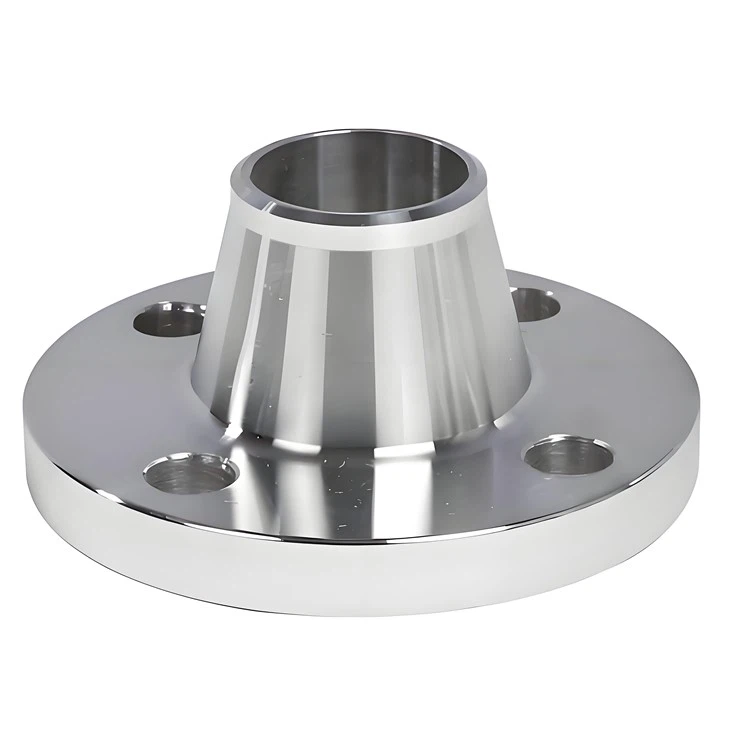

For example, if the microstructure has a lot of hard phases or is prone to phase transformations during welding, it can lead to problems like cracking or reduced strength in the weld zone. On the other hand, a material with a more uniform and stable microstructure is less likely to have these issues.
If you're interested in weldable flanges, you might also want to look at Weld Neck Flange, which is another type of flange commonly used in piping systems.
Impact on Manufacturing Processes
The microstructure of the flange material also impacts the manufacturing processes. Forging, machining, and heat treatment are all affected by the microstructure.
During forging, a material with a certain microstructure might be more malleable, making it easier to shape the flange. Machining can also be influenced by the microstructure. A material with a hard or brittle microstructure might be more difficult to machine, leading to higher tool wear and longer machining times.
Heat treatment is used to modify the microstructure of the flange material to achieve the desired properties. By controlling the heating and cooling rates, we can change the grain size, phase composition, and other aspects of the microstructure.
Larger Flanges: ASME B16.47 RF
For larger flanges, from NPS 26 to NPS 60, the ASME B16.47 standard is used. The same principles about the impact of microstructure on performance apply here as well. You can find more information about RF Flange NPS 26~NPS60.
However, with larger flanges, there are additional challenges. The heat treatment and manufacturing processes need to be carefully controlled to ensure a uniform microstructure throughout the flange. Any variations in the microstructure can lead to uneven performance and potential failure points.
Conclusion
In conclusion, the microstructure of the flange material has a profound impact on the performance of ASME B16.5 RF flanges. It affects strength, ductility, corrosion resistance, fatigue resistance, weldability, and manufacturing processes. As a supplier, it's our job to understand these relationships and choose the right materials and manufacturing processes to ensure high-quality flanges.
If you're in the market for ASME B16.5 RF flanges or have any questions about flange performance and microstructure, don't hesitate to reach out. We're here to help you find the best solutions for your piping needs.
References
- ASME B16.5 Standard for Pipe Flanges and Flanged Fittings
- ASME B16.47 Standard for Large Diameter Steel Flanges
- Materials Science and Engineering textbooks on microstructure and material properties