



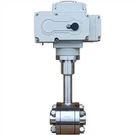
Controlling the opening and closing time of a check valve is a crucial aspect in various fluid control systems. As a well - established check valve supplier, I've witnessed firsthand the importance of precise timing in the operation of these valves. In this blog, I'll share some in - depth knowledge about how to control the opening and closing time of check valves, along with the significance of such control.
Understanding Check Valves
Before delving into the control methods, it's essential to have a basic understanding of check valves. Check valves are mechanical devices that allow fluid to flow in one direction only. They are widely used in industries such as oil and gas, water treatment, and chemical processing to prevent backflow, which could cause damage to equipment or disrupt the normal operation of a system.
There are different types of check valves, each with its own unique operating characteristics. For example, the Piston Check Valve uses a piston to control the flow. When the fluid pressure in the forward direction is sufficient, the piston moves to open the valve, allowing the fluid to pass. In the reverse direction, the pressure forces the piston back to close the valve.
The Wafer Lift Check Valve operates based on the lifting action of a disc. When the fluid flow exerts enough upward force on the disc, the valve opens. Once the flow stops or reverses, the disc drops back to its seat, closing the valve.
The Single Plate Wafer Check Valve has a single plate that pivots to open and close. The movement of this plate is determined by the fluid pressure and flow direction.
Factors Affecting Opening and Closing Time
Several factors can influence the opening and closing time of a check valve.
Fluid Pressure
Fluid pressure is one of the most significant factors. In general, a higher forward fluid pressure will cause the check valve to open more quickly. When the pressure differential across the valve reaches a certain threshold, the valve disc or piston will start to move. For example, in a piston check valve, a large pressure difference between the inlet and outlet will push the piston aside rapidly, allowing the fluid to flow.
Conversely, when the pressure drops or reverses, the valve will start to close. The closing time is also affected by the pressure. A sudden drop in forward pressure or a significant reverse pressure will cause the valve to close faster.
Fluid Viscosity
Viscosity plays an important role as well. High - viscosity fluids offer more resistance to flow. In a check valve, this means that it may take longer for the fluid to build up enough force to open the valve. For instance, in a system handling thick oils, the valve may open more slowly compared to a system with water. Similarly, when the flow stops, the high - viscosity fluid may take longer to drain out of the valve chamber, resulting in a slower closing time.
Valve Design and Size
The design of the check valve itself has a major impact on its opening and closing time. Valves with a larger flow area may require more fluid volume to build up the necessary pressure for opening, which can increase the opening time. On the other hand, a well - designed valve with a streamlined internal structure can reduce the resistance to flow, enabling faster opening and closing.
For example, a valve with a lightweight disc or piston will respond more quickly to changes in fluid pressure compared to a heavier one. The spring stiffness in spring - assisted check valves also affects the opening and closing behavior. A stiffer spring will require more pressure to open the valve but may cause it to close more rapidly.
Methods to Control Opening and Closing Time
Adjusting Spring Tension
In spring - assisted check valves, adjusting the spring tension is a common method to control the opening and closing time. By increasing the spring tension, more fluid pressure is required to open the valve. This is useful in applications where you want to prevent premature opening due to small fluctuations in pressure. However, it also means that the valve will open more slowly when the pressure finally reaches the required level.
Conversely, reducing the spring tension allows the valve to open more easily and quickly. But it may also lead to a less reliable closing mechanism, as the valve may not close tightly enough under low - pressure conditions.
Using Dampers
Dampers can be installed in check valves to control the speed of the disc or piston movement. A damper is a device that provides resistance to the motion of the valve components. For example, a hydraulic damper can be used to slow down the opening or closing process.
When the valve is opening, the damper restricts the flow of a hydraulic fluid, which in turn slows down the movement of the valve disc. Similarly, during closing, the damper can control the rate at which the disc returns to its seat. This is particularly useful in applications where sudden opening or closing can cause water hammer or other hydraulic shocks.
Modifying the System Pressure Profile
By adjusting the overall system pressure profile, you can also control the opening and closing time of the check valve. For example, using a pressure - regulating valve upstream of the check valve can ensure that the pressure reaches the desired level gradually. This can prevent sudden opening or closing of the check valve.
If you want the valve to open at a specific time, you can program the pressure - regulating valve to increase the pressure at the appropriate moment. Similarly, to control the closing time, you can gradually reduce the pressure in the system.
Importance of Controlling Opening and Closing Time
Precisely controlling the opening and closing time of a check valve offers several benefits.
Preventing Water Hammer
Water hammer is a phenomenon that occurs when there is a sudden change in fluid flow velocity, such as when a valve closes rapidly. This can cause a shock wave in the pipeline, which may damage the pipes, fittings, and other equipment. By controlling the closing time of the check valve, you can reduce the risk of water hammer. A slower closing time allows the fluid to decelerate gradually, minimizing the impact of the shock wave.
Optimizing System Performance
In some systems, the opening and closing time of the check valve can affect the overall performance. For example, in a pumping system, if the check valve opens too late, it can cause a loss of prime in the pump, reducing its efficiency. On the other hand, if it closes too slowly, it may allow backflow, which can waste energy and cause wear and tear on the pump.
Protecting Equipment
Proper control of the opening and closing time can protect downstream equipment from damage. For instance, in a chemical processing plant, preventing backflow of corrosive chemicals can extend the lifespan of pipes, valves, and other components.


Conclusion
Controlling the opening and closing time of a check valve is a complex but essential task in fluid control systems. As a check valve supplier, I understand the importance of providing valves that can be precisely controlled to meet the specific needs of different applications.
By considering factors such as fluid pressure, viscosity, valve design, and using methods like adjusting spring tension, using dampers, and modifying the system pressure profile, you can achieve optimal opening and closing times. This not only improves the safety and reliability of the system but also enhances its overall performance.
If you are in need of high - quality check valves and want to discuss more about controlling their opening and closing time, feel free to contact us for further procurement and technical discussions. We are committed to providing you with the best solutions for your fluid control needs.
References
- Miller, R. W. (2017). Flow Measurement Engineering Handbook. McGraw - Hill Education.
- Walas, S. M. (2018). Chemical Process Equipment: Selection and Design. Butterworth - Heinemann.