


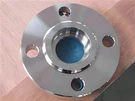


Hey there! I'm an ASME B16.47 RF flange supplier, and I've seen a lot in this industry. Today, I want to share with you how to evaluate the quality of ASME B16.47 RF flanges from different suppliers. It's super important, especially if you're in the market to buy these flanges.
First off, let's talk about what ASME B16.47 RF flanges are. The ASME B16.47 RF flanges are large diameter steel flanges that follow the standards set by the American Society of Mechanical Engineers (ASME). These flanges are widely used in various industries like oil and gas, chemical, and power generation.
Material Quality
One of the most crucial factors in evaluating the quality of ASME B16.47 RF flanges is the material. The material used should meet the requirements of the ASME B16.47 standard. Good suppliers will use high - quality steel that has the right chemical composition and mechanical properties.
You can ask the supplier for material certificates. These certificates show the chemical analysis of the steel, including elements like carbon, manganese, sulfur, and phosphorus. For example, the carbon content should be within a certain range to ensure the flange has the right strength and ductility. A good supplier will have no problem providing these certificates.
Also, check the mechanical properties such as tensile strength, yield strength, and elongation. Tensile strength tells you how much pulling force the flange can withstand before breaking. Yield strength is the point at which the flange starts to deform permanently. Elongation shows how much the flange can stretch before it breaks.
Dimensional Accuracy
Dimensional accuracy is another key aspect. ASME B16.47 has strict rules about the dimensions of these flanges, including the outer diameter, inner diameter, bolt hole diameter, and bolt circle diameter. A flange with incorrect dimensions may not fit properly in your pipeline system, leading to leaks or other problems.
A reliable supplier will use precision machining equipment to ensure that the flanges are made to the exact dimensions specified in the standard. You can ask the supplier for dimensional inspection reports. These reports should show that the flanges meet the tolerance requirements of ASME B16.47. For instance, the tolerance for the outer diameter might be ± a few millimeters, and a good supplier will make sure their flanges are within this range.
Surface Finish
The surface finish of the flange is also important. A smooth surface finish can prevent corrosion and ensure a good seal when the flange is connected to other components in the pipeline. Suppliers should use proper surface treatment methods, such as shot blasting or painting, to protect the flange from rust and other forms of corrosion.
You can visually inspect the surface of the flange. Look for any signs of rough spots, pits, or cracks. A high - quality flange should have a uniform and smooth surface. If the surface looks uneven or has visible defects, it might be a sign of poor quality.
Welding Quality (if applicable)
Some ASME B16.47 RF flanges may require welding during installation. In this case, the welding quality is crucial. The welding should follow the relevant welding standards, such as ASME B 16.25 BW.
A good supplier will have qualified welders who are trained and certified to perform the welding. They should also have a proper welding procedure specification (WPS) in place. You can ask the supplier for information about their welding process, including the type of welding electrodes used, the welding parameters, and the inspection methods after welding.


Testing and Inspection
Reputable suppliers will conduct various tests and inspections on their ASME B16.47 RF flanges. These tests can include ultrasonic testing (UT), magnetic particle testing (MT), and hydrostatic testing.
Ultrasonic testing is used to detect internal defects in the flange, such as cracks or voids. Magnetic particle testing is mainly used for detecting surface and near - surface defects in ferromagnetic materials. Hydrostatic testing is used to check the pressure - bearing capacity of the flange.
Ask the supplier about the testing and inspection procedures they follow. They should be able to provide you with test reports that show the results of these tests. If a supplier is reluctant to provide these reports, it could be a red flag.
Comparison with Other Standards
It's also a good idea to compare the ASME B16.47 RF flanges with other similar standards, such as ASME B16.5 RF. While ASME B16.47 is for large diameter flanges and ASME B16.5 is for smaller diameter flanges, there are some similarities and differences in the requirements.
Understanding these differences can help you better evaluate the quality of the ASME B16.47 RF flanges. For example, the material requirements and dimensional tolerances may vary slightly between the two standards. A supplier who is knowledgeable about these differences is more likely to provide high - quality flanges.
Supplier's Reputation
Last but not least, consider the supplier's reputation. You can look for reviews and testimonials from other customers. Check if the supplier has been in the industry for a long time. A supplier with a good track record is more likely to provide reliable products.
You can also ask for references from the supplier. Contact these references and ask about their experience with the supplier, including the quality of the flanges, the delivery time, and the customer service.
In conclusion, evaluating the quality of ASME B16.47 RF flanges from different suppliers requires a comprehensive approach. You need to consider factors like material quality, dimensional accuracy, surface finish, welding quality (if applicable), testing and inspection, comparison with other standards, and the supplier's reputation.
If you're in the market for ASME B16.47 RF flanges and have any questions or need more information, don't hesitate to reach out. We're here to help you make the right choice and ensure you get high - quality flanges for your projects.
References
- ASME B16.47 Standard
- ASME B 16.25 Standard
- ASME B16.5 Standard