




As a supplier of ASME B16.5 RF flanges, I've had the privilege of witnessing the industry's high - standards and the critical role these flanges play in various applications. ASME B16.5 RF flanges are a staple in the piping industry, used in a wide range of sectors including oil and gas, chemical processing, and power generation. In this blog, I'll delve into the quality control standards that ensure these flanges meet the required performance and safety criteria.
Material Requirements
The first and perhaps most fundamental aspect of quality control for ASME B16.5 RF flanges is the material selection. The standard specifies a variety of materials that can be used, including carbon steel, stainless steel, alloy steel, and nickel - based alloys. Each material has its own set of mechanical and chemical properties that make it suitable for different operating conditions.
For carbon steel flanges, the material must meet the requirements of specific ASTM standards, such as ASTM A105 or ASTM A350 LF2. These standards define the chemical composition limits for elements like carbon, manganese, sulfur, and phosphorus. For example, in ASTM A105, the carbon content should be within 0.35% maximum, which ensures good weldability and mechanical strength.
Stainless steel flanges, on the other hand, are often made from materials like ASTM A182 F304 or F316. These materials have high corrosion resistance due to the presence of chromium and nickel. The chemical composition of these stainless steels is tightly controlled to maintain their corrosion - resistant properties. The minimum chromium content in ASTM A182 F304 is 18%, and for F316, it is also around 16 - 18%.
Alloy steel flanges, such as those made from ASTM A182 F11 or F22, are used in high - temperature and high - pressure applications. The alloying elements like molybdenum and chromium enhance the strength and creep resistance of the flanges. Nickel - based alloy flanges, such as those made from ASTM B564 N06625, are used in extremely corrosive environments, and their chemical composition is strictly regulated to ensure their performance.
Dimensional Accuracy
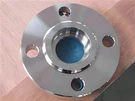
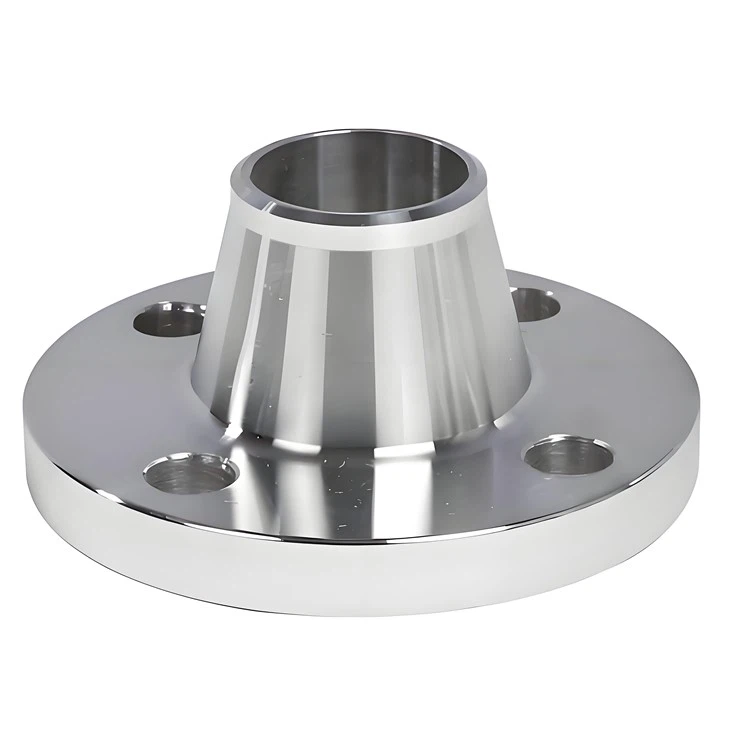
Another crucial quality control aspect is dimensional accuracy. ASME B16.5 provides detailed dimensional tables for different sizes and pressure ratings of RF flanges. The flange's outside diameter, bolt circle diameter, number and size of bolt holes, and the thickness of the flange must all conform to these tables.
For example, the outside diameter of a 2 - inch Class 150 ASME B16.5 RF flange should be within a specified tolerance range. Any deviation from these dimensions can lead to problems during installation, such as misalignment of bolt holes or improper sealing. The face of the flange must also be flat and smooth within a certain tolerance. A rough or uneven face can prevent a proper seal, leading to leaks in the piping system.
The bolt holes must be drilled with high precision. The diameter of the bolt holes and their location on the bolt circle are specified in the standard. If the bolt holes are too large or too small, or if they are not evenly spaced, it can affect the ability to properly install and tighten the bolts, which is essential for maintaining the integrity of the flange connection.
Surface Finish
The surface finish of ASME B16.5 RF flanges is also an important quality control factor. The flange face should have a smooth surface finish to ensure a good seal when paired with a gasket. A rough surface can damage the gasket or prevent it from forming a tight seal, leading to potential leaks.
The standard specifies a maximum surface roughness for the flange face. This is typically measured in micro - inches (µin) or micrometers (µm). For most applications, a surface roughness of around 125 - 250 µin (3.2 - 6.3 µm) is acceptable. Special applications may require a finer surface finish.
In addition to the flange face, the outer surface of the flange should also be free from defects such as cracks, pits, and laminations. These defects can weaken the flange and reduce its service life. Visual inspection and non - destructive testing methods are often used to detect such surface defects.
Mechanical Properties
The mechanical properties of ASME B16.5 RF flanges are critical for their performance in service. These properties include tensile strength, yield strength, elongation, and hardness.
Tensile strength is the maximum stress a flange can withstand before it breaks under tension. Yield strength is the stress at which the flange begins to deform plastically. Elongation measures the ability of the flange to stretch before breaking. Hardness is an indication of the flange's resistance to indentation and wear.
The standard specifies minimum values for these mechanical properties based on the material and grade of the flange. For example, for ASTM A105 carbon steel flanges, the minimum tensile strength is typically 485 MPa (70 ksi), and the minimum yield strength is 250 MPa (36 ksi).
To ensure that the flanges meet these mechanical property requirements, samples are taken from the manufacturing process and tested in a laboratory. Tensile tests, hardness tests, and other mechanical tests are performed to verify the properties of the flanges.
Non - Destructive Testing (NDT)
Non - destructive testing is an important part of the quality control process for ASME B16.5 RF flanges. NDT methods are used to detect internal and surface defects without damaging the flanges.
One common NDT method is ultrasonic testing (UT). UT uses high - frequency sound waves to detect internal flaws such as cracks, voids, or inclusions in the flange material. The sound waves are transmitted into the flange, and any reflections from defects are detected and analyzed.
Magnetic particle testing (MT) is used to detect surface and near - surface defects in ferromagnetic materials, such as carbon steel flanges. A magnetic field is applied to the flange, and iron particles are then applied to the surface. If there is a defect, the magnetic field will be distorted, and the iron particles will accumulate at the defect site, making it visible.
Liquid penetrant testing (PT) is another method used to detect surface - opening defects. A liquid penetrant is applied to the flange surface, allowed to seep into any defects, and then excess penetrant is removed. A developer is then applied, which draws the penetrant out of the defects, making them visible.
Radiographic testing (RT) can also be used to detect internal defects. It involves using X - rays or gamma rays to create an image of the internal structure of the flange. Any defects will appear as anomalies in the image.
Certification and Documentation
To ensure compliance with ASME B16.5 standards, proper certification and documentation are essential. Flanges should be accompanied by a material test report (MTR), which provides information about the chemical composition, mechanical properties, and heat treatment of the flange material.
The MTR should be traceable to the original heat of the material, allowing for full traceability throughout the manufacturing process. In addition, a certificate of compliance should be provided, stating that the flanges have been manufactured in accordance with ASME B16.5 and have passed all the required quality control tests.
Comparison with Other Flange Standards
It's also important to note how ASME B16.5 RF flanges compare with other flange standards. For example, ASME B 16.25 BW is a standard for butt - welding ends, which has different requirements and applications compared to ASME B16.5 RF flanges. ASME B16.25 BW is more focused on the welding process and the quality of the weld joint, while ASME B16.5 RF flanges are centered around the flange itself and its connection to other components.

Another related standard is ASME B16.47 RF, which covers large - diameter flanges. While there are some similarities in the basic principles of quality control, ASME B16.47 RF has its own unique dimensional and material requirements due to the larger size of the flanges.
Conclusion
In conclusion, the quality control standards for ASME B16.5 RF flanges are comprehensive and cover all aspects of the flange's manufacturing, from material selection to final testing. These standards ensure that the flanges are safe, reliable, and perform as expected in various industrial applications.
As a supplier of ASME B16.5 RF flanges, I am committed to meeting and exceeding these quality control standards. If you are in the market for high - quality ASME B16.5 RF flanges, I invite you to contact me for a detailed discussion about your specific requirements and to start a procurement negotiation.
References
- ASME B16.5 Standard for Pipe Flanges and Flanged Fittings
- ASTM Standards for Flange Materials
- Various industry - specific guidelines and best practices for flange manufacturing and quality control