


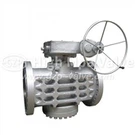
When it comes to industrial fluid control systems, 3 way ball valves play a crucial role. As a trusted 3 Way Ball Valve 3 Way Ball Valve supplier, I often encounter customers who are confused about the differences between full port and standard port 3 way ball valves. In this blog post, I will delve into the details of these two types of valves, highlighting their unique features, advantages, and applications.
Understanding the Basics of 3 Way Ball Valves
Before we explore the differences between full port and standard port 3 way ball valves, let's first understand the basic concept of a 3 way ball valve. A 3 way ball valve is a type of valve that uses a ball with a hole in the middle to control the flow of fluid. The ball can be rotated to different positions to direct the flow of fluid through different ports. This allows for versatile flow control, making 3 way ball valves ideal for applications where fluid needs to be diverted, mixed, or distributed.
Full Port 3 Way Ball Valves
A full port 3 way ball valve, also known as a full bore ball valve, has a ball with a hole that is the same size as the pipe diameter. This means that there is minimal restriction to the flow of fluid through the valve. When the valve is fully open, the fluid can flow through the valve with very little pressure drop, similar to flowing through a straight pipe.
Features and Advantages
- Low Pressure Drop: The most significant advantage of a full port 3 way ball valve is its low pressure drop. Since the ball hole is the same size as the pipe diameter, there is no significant reduction in the flow area, resulting in minimal resistance to the fluid flow. This makes full port valves ideal for applications where maintaining a high flow rate and low pressure drop is critical, such as in high - volume fluid transfer systems.
- Easy to Clean and Maintain: The large opening of the full port ball valve makes it easier to clean and maintain. There are fewer areas where debris or sediment can accumulate, reducing the risk of clogging. This is particularly important in applications where the fluid contains solid particles or where frequent cleaning is required.
- High Flow Capacity: Full port valves can handle higher flow rates compared to standard port valves. This makes them suitable for applications that require large volumes of fluid to be transferred quickly, such as in industrial pipelines, water treatment plants, and oil and gas production facilities.
Applications
Full port 3 way ball valves are commonly used in applications where high flow rates and low pressure drops are essential. Some typical applications include:
- Chemical Processing: In chemical plants, full port valves are used to transfer large volumes of chemicals between different processing units. The low pressure drop ensures that the chemicals can be transferred efficiently without causing excessive wear on the pumps.
- Water Treatment: In water treatment facilities, full port valves are used to control the flow of water through various treatment processes. The large flow capacity allows for rapid water transfer, while the easy - to - clean design helps prevent clogging from sediment and debris.
- Oil and Gas Industry: In the oil and gas industry, full port 3 way ball valves are used in pipelines to control the flow of crude oil, natural gas, and other petroleum products. The high flow capacity and low pressure drop are crucial for efficient transportation of these fluids over long distances.
Standard Port 3 Way Ball Valves
A standard port 3 way ball valve has a ball with a hole that is smaller than the pipe diameter. When the valve is fully open, the fluid flow is restricted to some extent, resulting in a higher pressure drop compared to a full port valve.
Features and Advantages
- Cost - Effective: Standard port 3 way ball valves are generally more cost - effective than full port valves. Since they require less material to manufacture, they are often priced lower, making them a more budget - friendly option for applications where high flow rates and low pressure drops are not critical.
- Compact Design: Standard port valves have a more compact design compared to full port valves. This makes them suitable for applications where space is limited, such as in small - scale industrial equipment or in residential plumbing systems.
- Sufficient for Many Applications: In many applications, the flow requirements are not extremely high, and a standard port valve can provide adequate flow control. For example, in some low - flow water distribution systems or in small - scale chemical dosing applications, a standard port valve can meet the requirements without the need for the additional cost and size of a full port valve.
Applications
Standard port 3 way ball valves are widely used in applications where cost, space, and moderate flow rates are the primary considerations. Some common applications include:
- Residential Plumbing: In residential plumbing systems, standard port 3 way ball valves are used to control the flow of water in faucets, showers, and other fixtures. The compact design and cost - effectiveness make them a popular choice for these applications.
- Small - Scale Industrial Processes: In small - scale industrial processes, such as in laboratory equipment or small - batch chemical production, standard port valves can provide sufficient flow control at a lower cost.
- HVAC Systems: In heating, ventilation, and air conditioning (HVAC) systems, standard port 3 way ball valves are used to control the flow of refrigerant, water, or air. The moderate flow requirements of these systems can be met by standard port valves, which are also more space - efficient.
Key Differences in Comparison
- Flow Capacity: The most obvious difference between full port and standard port 3 way ball valves is their flow capacity. Full port valves can handle much higher flow rates due to their larger ball hole, while standard port valves have a more limited flow capacity.
- Pressure Drop: Full port valves have a significantly lower pressure drop compared to standard port valves. The larger opening in full port valves allows the fluid to flow more freely, resulting in less resistance and pressure loss.
- Cost: Standard port valves are generally less expensive than full port valves. The reduced material requirements for standard port valves make them a more economical choice, especially for applications where high - performance features are not necessary.
- Size and Installation Space: Full port valves are usually larger in size due to the larger ball and valve body required to accommodate the full - bore opening. Standard port valves have a more compact design, which can be an advantage in applications where space is limited.
Choosing the Right Valve for Your Application
When choosing between a full port and a standard port 3 way ball valve, several factors need to be considered:
- Flow Requirements: If your application requires high flow rates and low pressure drops, a full port valve is the better choice. However, if the flow requirements are moderate, a standard port valve may be sufficient.
- Budget: If cost is a major concern, and the application does not require the high - performance features of a full port valve, a standard port valve can provide a more cost - effective solution.
- Space Constraints: In applications where space is limited, such as in small equipment or tight installation areas, a standard port valve's compact design may be more suitable.
Conclusion
In summary, the choice between a full port and a standard port 3 way ball valve depends on the specific requirements of your application. Full port valves offer high flow rates, low pressure drops, and easy maintenance, but they are generally more expensive and larger in size. Standard port valves, on the other hand, are more cost - effective and compact, making them suitable for applications with moderate flow requirements and space limitations.


As a 3 Way Ball Valve supplier, I am committed to providing high - quality valves that meet the diverse needs of our customers. Whether you need a full port or a standard port 3 way ball valve, I can offer you the right solution for your application. If you have any questions or need assistance in selecting the appropriate valve, please feel free to contact me for a detailed discussion and procurement negotiation.
References
- Valve Handbook, 4th Edition, by J. F. Carucci and M. S. Miller
- Industrial Valves: Selection, Installation, and Maintenance, by John R. Olson