


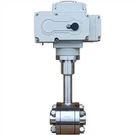
Hey there! As a check valve supplier, I've been getting a lot of questions lately about the function of check valves in refrigeration systems. So, I thought I'd take a moment to break it down for you.
First off, let's talk about what a check valve is. Simply put, a check valve is a type of valve that allows fluid (in this case, refrigerant) to flow in one direction only. It's like a one - way street for your refrigerant. When the pressure on the inlet side of the valve is higher than the pressure on the outlet side, the valve opens, letting the refrigerant pass through. But when the pressure on the outlet side tries to push back, the valve closes, preventing any reverse flow.
Now, let's dive into why check valves are so important in refrigeration systems.
Preventing Reverse Flow
One of the primary functions of a check valve in a refrigeration system is to prevent reverse flow of the refrigerant. In a refrigeration cycle, the refrigerant is supposed to flow in a specific direction. For example, in a basic vapor - compression refrigeration system, the refrigerant moves from the compressor to the condenser, then to the expansion valve, and finally to the evaporator before returning to the compressor.
If there was no check valve, there could be a situation where the refrigerant starts flowing in the wrong direction. This can happen when the compressor stops suddenly, and the pressure differences in the system cause the refrigerant to backtrack. Reverse flow can cause all sorts of problems. It can damage the compressor, as it's not designed to handle refrigerant flowing in the wrong direction. It can also disrupt the normal operation of the condenser and evaporator, reducing the overall efficiency of the refrigeration system.
Protecting Compressor
The compressor is the heart of a refrigeration system. It compresses the refrigerant gas, increasing its pressure and temperature. A check valve plays a crucial role in protecting the compressor. When the compressor shuts down, the check valve closes immediately. This prevents the high - pressure refrigerant on the discharge side of the compressor from flowing back into the compressor.
If the high - pressure refrigerant were to flow back into the compressor, it could cause the compressor to work harder during the next startup. Over time, this extra stress can lead to premature wear and tear of the compressor components, such as the pistons, valves, and bearings. By using a check valve, we can extend the lifespan of the compressor and reduce the frequency of maintenance and repairs.
Maintaining System Efficiency
Efficiency is key in any refrigeration system. A check valve helps maintain the efficiency of the system by ensuring that the refrigerant flows smoothly in the correct direction. When the refrigerant flows as intended, the heat transfer processes in the condenser and evaporator work more effectively.
In the condenser, the refrigerant releases heat to the surrounding environment as it changes from a high - pressure gas to a high - pressure liquid. If there is reverse flow, the heat transfer process can be disrupted, and the condenser may not be able to cool the refrigerant properly. Similarly, in the evaporator, the refrigerant absorbs heat from the space being cooled as it changes from a low - pressure liquid to a low - pressure gas. Reverse flow can interfere with this heat absorption process, reducing the cooling capacity of the system.
Types of Check Valves in Refrigeration Systems
There are several types of check valves that can be used in refrigeration systems. One popular type is the Wafer Lift Check Valve. This type of valve uses a disc that is lifted off its seat when the fluid flows in the forward direction. When the flow stops or tries to reverse, the disc drops back onto the seat, closing the valve.
Another type is the Single Plate Wafer Check Valve. It has a single plate that pivots to allow forward flow and closes to prevent reverse flow. This type of valve is known for its compact design and quick response time.
The Piston Check Valve is also commonly used. It uses a piston that moves within a cylinder. When the pressure on the inlet side is high enough, the piston moves to open the valve, and when the pressure reverses, the piston moves back to close the valve.
Sizing and Selection
Choosing the right check valve for a refrigeration system is crucial. The size of the check valve should be based on the flow rate and pressure requirements of the system. If the valve is too small, it can cause a significant pressure drop, reducing the efficiency of the system. On the other hand, if the valve is too large, it may not close properly, allowing reverse flow.
When selecting a check valve, you also need to consider the type of refrigerant being used. Different refrigerants have different properties, such as temperature, pressure, and chemical composition. The check valve material should be compatible with the refrigerant to prevent corrosion and other chemical reactions.
Installation and Maintenance
Proper installation of the check valve is essential for its correct operation. The valve should be installed in the correct orientation, with the arrow on the valve body indicating the direction of flow. It should also be installed in a location where it is easily accessible for maintenance and inspection.
Regular maintenance of the check valve is also important. Over time, the valve components can wear out, and debris can accumulate inside the valve. This can affect the valve's ability to open and close properly. Inspecting the valve periodically and cleaning or replacing the components as needed can help ensure the long - term performance of the check valve and the refrigeration system as a whole.
Conclusion
In conclusion, check valves are an essential component of refrigeration systems. They prevent reverse flow, protect the compressor, maintain system efficiency, and ensure the smooth operation of the entire refrigeration cycle. As a check valve supplier, I understand the importance of providing high - quality check valves that are reliable and efficient.


If you're in the market for check valves for your refrigeration system, we've got a wide range of options to choose from. Whether you need a Wafer Lift Check Valve, a Single Plate Wafer Check Valve, or a Piston Check Valve, we can help you find the right one for your specific needs. Don't hesitate to reach out for a consultation or to start a procurement discussion. We're here to make sure your refrigeration system runs at its best.
References
- ASHRAE Handbook - Refrigeration. American Society of Heating, Refrigerating and Air - Conditioning Engineers.
- Refrigeration and Air Conditioning Technology. William C. Whitman, William M. Johnson, John Tomczyk, Eugene Silberstein.