


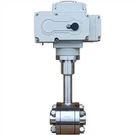


What is the pressure drop across a globe valve? Well, if you're in the industry, you've probably wondered about this at some point. As a globe valve supplier, I've dealt with this question a lot, and I'm here to break it down for you.
First off, let's understand what a globe valve is. It's a type of valve used for regulating flow in a pipeline. You can think of it like a faucet in your house, but on a much larger scale and for industrial applications. Globe valves are super versatile and can be found in various industries like oil and gas, water treatment, and power generation.
Now, the pressure drop. Pressure drop is basically the difference in pressure between the inlet and the outlet of a valve. When fluid flows through a globe valve, it has to navigate through a narrow passage, and this causes a reduction in pressure. Why does this happen? It's because the fluid has to overcome resistance as it moves through the valve. The shape of the globe valve, with its spherical body and the way the disc sits inside it, creates a tortuous path for the fluid. This forces the fluid to change direction multiple times, which in turn increases the friction and results in a pressure drop.
There are a few factors that can affect the pressure drop across a globe valve. One of the main factors is the valve size. Generally, smaller valves have a higher pressure drop because the fluid has to pass through a more restricted area. So, if you've got a pipeline with a high flow rate and you're using a small globe valve, you're likely to see a significant pressure drop.
The flow rate of the fluid also plays a big role. The higher the flow rate, the greater the pressure drop. Think of it like trying to push a lot of water through a small pipe quickly. It's going to be a struggle, and you'll lose a lot of energy in the process. That energy loss is what we see as a pressure drop.
The type of fluid is another factor. Viscous fluids, like oil, are going to have a higher pressure drop compared to less viscous fluids like water. This is because viscous fluids have more internal resistance, and it takes more energy to move them through the valve.
Now, let's talk about why pressure drop matters. In industrial applications, pressure drop can have a big impact on the efficiency of a system. If the pressure drop is too high, it can lead to increased energy consumption. You'll need more pumps or compressors to maintain the required flow rate, which means higher operating costs. It can also affect the performance of other components in the system. For example, if the pressure at the outlet of the valve is too low, it might not be enough to operate downstream equipment properly.


As a globe valve supplier, I offer a wide range of globe valves to suit different applications. For instance, we have the Extend Stem Globe Valve. This valve is great for applications where you need to operate the valve from a distance or in harsh environments. It has an extended stem that allows for easy access and control.
We also have the F304 BW Forged Globe Valve. Made from high - quality F304 material, this valve is highly durable and corrosion - resistant. It's suitable for a variety of industries, especially those dealing with corrosive fluids.
Another option is the LF2 Forged Globe Valve. This valve is known for its excellent strength and reliability. It can handle high - pressure and high - temperature applications with ease.
When you're choosing a globe valve, it's important to consider the pressure drop requirements of your system. You need to make sure that the valve you select will minimize the pressure drop while still providing the necessary flow control. We can help you with that. Our team of experts can analyze your system and recommend the best valve for your specific needs.
If you're in the market for a globe valve, don't hesitate to reach out. We're here to provide you with the best products and solutions. Whether you're a small business or a large industrial company, we've got the right valve for you. Contact us to start a discussion about your requirements and let's find the perfect globe valve for your application.
References
- "Valve Handbook: Selection, Sizing, and Applications" by Crane Co.
- "Fluid Mechanics for Engineers" by Douglas C. Giancoli.