



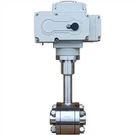
What materials are commonly used to make DBB Ball Valve?
As a supplier of Double Block and Bleed (DBB) ball valves, I am often asked about the materials used in their construction. The choice of materials is crucial as it directly impacts the valve's performance, durability, and suitability for various applications. In this blog post, I will discuss the commonly used materials for making DBB ball valves.
Metals
Stainless Steel
Stainless steel is one of the most popular materials for DBB ball valves. It offers excellent corrosion resistance, which makes it suitable for use in a wide range of industries, including chemical processing, oil and gas, and water treatment. Stainless steel valves can withstand harsh environments, including exposure to acids, alkalis, and saltwater.
There are different grades of stainless steel, such as 304 and 316. Grade 304 stainless steel is a general - purpose alloy that contains 18% chromium and 8% nickel. It provides good corrosion resistance in many common environments. Grade 316 stainless steel, on the other hand, has a higher nickel content and also contains molybdenum, which enhances its resistance to pitting and crevice corrosion. This makes it ideal for more aggressive chemical applications.
Carbon Steel
Carbon steel is another widely used material for DBB ball valves. It is known for its high strength and durability. Carbon steel valves are commonly used in applications where high - pressure and high - temperature conditions are present, such as in power generation plants and oil refineries.
However, carbon steel is prone to corrosion, especially in the presence of moisture and certain chemicals. To address this issue, carbon steel valves are often coated or lined with anti - corrosion materials. For example, they can be coated with epoxy or zinc to protect the surface from rusting.
Alloy Steel
Alloy steel is a type of steel that contains additional elements such as chromium, nickel, molybdenum, and vanadium. These elements are added to enhance the steel's properties, such as strength, hardness, and corrosion resistance. Alloy steel DBB ball valves are used in applications that require high - performance valves, such as in the aerospace and defense industries.
For instance, a valve made of alloy steel with a high molybdenum content can withstand extremely high temperatures and pressures, making it suitable for use in jet engines and other high - stress applications.
Non - Metals
PTFE (Polytetrafluoroethylene)
PTFE is a synthetic fluoropolymer that is widely used as a sealing material in DBB ball valves. It has excellent chemical resistance, low friction coefficient, and high temperature resistance. PTFE seals can provide a tight and reliable seal, preventing leakage of fluids.
In DBB ball valves, PTFE is often used for the valve seats and stem seals. Its non - stick properties also make it easy to operate the valve, reducing wear and tear on the moving parts.


Nylon
Nylon is a thermoplastic polymer that is known for its high strength, toughness, and abrasion resistance. It is used in DBB ball valves as a bearing material or for certain internal components. Nylon bearings can reduce friction between the valve ball and the body, improving the valve's operating efficiency.
Moreover, nylon has good chemical resistance to many substances, making it suitable for use in various industrial applications.
Composite Materials
Composite materials are made by combining two or more different materials to achieve specific properties. In the context of DBB ball valves, composite materials can offer a combination of strength, corrosion resistance, and lightweight.
For example, a composite valve body may be made by combining a fiber - reinforced polymer with a metal insert. The fiber - reinforced polymer provides corrosion resistance and lightweight, while the metal insert adds strength and stability.
Applications and Material Selection
The choice of materials for a DBB ball valve depends on the specific application. For example, in the food and beverage industry, stainless steel valves are preferred due to their hygienic properties and corrosion resistance. In the oil and gas industry, where high - pressure and high - temperature conditions are common, carbon steel or alloy steel valves may be more suitable.
If the valve is used in a chemical plant where it will be exposed to aggressive chemicals, a valve made of stainless steel or with PTFE seals would be a better choice. On the other hand, for applications where weight is a concern, such as in aerospace, composite - material valves may be considered.
Our Product Range
As a DBB ball valve supplier, we offer a wide range of valves made from different materials to meet the diverse needs of our customers. Our Cast Trunnion Plated Ball Valve is made with high - quality materials and advanced manufacturing techniques, ensuring reliable performance. The Forged Trunnion Ball Valve provides excellent strength and durability, suitable for high - pressure applications. And our DIB Ball Valve offers double isolation and bleed functionality, with options for different materials to suit various environments.
Contact Us for Procurement
If you are in need of DBB ball valves for your project, we are here to assist you. Our team of experts can help you select the right valve based on your specific requirements, including the choice of materials. Whether you need a valve for a small - scale application or a large - scale industrial project, we have the products and expertise to meet your needs. Contact us today to start the procurement process and discuss your project in detail.
References
- ASM Handbook, Volume 1: Properties and Selection: Irons, Steels, and High - Performance Alloys.
- Valve World Magazine, various issues on valve materials and applications.
- Chemical Engineering Handbook, regarding material selection for chemical processing equipment.