
Latest Products


Contact Us
- No.97, 4th Avenue, Binhai Economic and Technology Development Zone, Wenzhou, China
- sales@gzp-valve.com
- +86-577-85859689


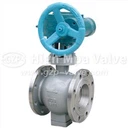
Cast Trunnion Ball Valve
Design: API 6D, API 608, MSS-SP-72(BS5351),ASME B16.34
Pressures range: ANSI 150 ~ANSI 2500 ,PN10~PN420
Size range: 2"-48" / DN50-DN1200
Description


Design Advantages for GZP Casted Trunnion Mounted Ball Valve
① Fire-safe design, ② Antistatic, ③ Anti-blowout stem, ④ DIB or DBB Design ⑤ Low fugitive emission packing, ⑥Seat grease injector or Stem seleant injector , ⑦ Trunnion mounted desgin.

| Technical data | ||||||||||
| Design | API 6D, API 608, MSS-SP-72(BS5351),ASME B16.34 | |||||||||
| Pressures range | ANSI 150 ~ANSI 2500 ,PN10~PN420 | |||||||||
| Size range | 2"-48" / DN50-DN1200 | |||||||||
| Body Material | A216 WCB | A352 LCB | A217 WC1 | A217 WC6 | A217 WC9 | A217 C5 | A351 CF8 | A351 CF8M | A351 CF3 | A351 CF3M |
| NACE MR-01-75/NACE MR-01-03 Special Requirements | ||||||||||
| Face to face | API 6D, ASME B 16.10, | |||||||||
| Fanged RF, FF, RTJ Ends | ASME B16.5, ASME B16.47 (Size 26''~60'') | |||||||||
| BS 4504, | ||||||||||
| Butt-Weld BW Ends | ASME B16.25 ,DIN 3239, | |||||||||
| Temperature range | -196°~ 650°C | |||||||||
| Design feature | ||||||||||
| Construction | Two or Three piece body and Welded body | |||||||||
| Port | Full bore and Reduced bore | |||||||||
| Ball Type | Solid ball | |||||||||
| Stem | Blowout-proof stem, Anti-static, | |||||||||
| Seat Sealing | Double Block and Bleed, Double Isolation and Bleed | |||||||||
| Valve Operation | Gear, pneumatic, Hydraulic, and Electric actuators. | |||||||||
| Locking devices, extended stem, etc | ||||||||||
| Fire Safe | API 607, API 6FA | |||||||||
| Other design | Anti-static design, automatic pressure relief design, emergency grease injection design, drain valve, anti-corrosion design, anti-sulfur design, etc | |||||||||
| Inspection and Test | ||||||||||
| Visual Inspection | MSS SP-55 | |||||||||
| Material Inspection | PMI Test----Chemical Analysis | |||||||||
| HB Test---Hardness Test | ||||||||||
| UT---Ultrasonic Test | ||||||||||
| RT---Radio-graphic Test | ||||||||||
| MT---Magnetic Test | ||||||||||
| NDT Test Non-destructive | ||||||||||
| Dimension inspection | According to drawings | |||||||||
| Valve Inspection and Test | API 598, API 6D, DIN 3230, EN12266 | |||||||||


Cavity Pressure Relief Seat

Single Piston Effective (SPE) Design
Pd = Medium Pressure
Pc = Body Cavity Pressure
Ps = Spring Force
The medium pressure "Pd" and the spring force "Ps" push the valve seat against the ball, ensuring tight sealing. When the body cavity pressure "Pc" increases beyond the combined pressure of the medium and spring force, the cavity pressure will push the seat away from the ball, allowing the cavity pressure to release automatically. This design ensures that the ball valve can perform blocking and bleeding functions using medium pressure, known as Double Block and Bleed (DBB Valves).
Double Piston Effective (DPE) Design
Similarly, the medium pressure "Pd" and the spring force "Ps" push the valve seat against the ball to ensure tight sealing. However, in this design, when the body cavity pressure reaches its limit, it is released through a body vent bleeder (Safety Valve). As a result, the valve cavity pressure remains smaller than the sum of "Pd" and "Ps". This design ensures that the ball valve provides double isolation and blocking, known as Double Isolation and Block (DIB Valves).


Structure: 2-piece or 3-piece body
It features a high shut-off sealing mechanism and low torque operation.
Provides block and bleed function.
Includes self-cavity pressure relief.
Fire-safe design is incorporated.
Constructed with blow-out proof stem.
Anti-static design is featured.
Equipped with a locking device for lever handle operation.
ISO 5211 actuator mounting is available.
Emergency grease injection is an optional feature.
Construction
The primary distinction between floating and trunnion-mounted ball valves lies in their construction. In a floating ball valve, the ball is attached to the stem at only one end, leaving the other end free to float within the valve body. Conversely, in a trunnion-mounted ball valve, the ball is connected to both the stem at one end and a secondary shaft called the trunnion at the other. This setup securely holds the ball, allowing it to rotate only as the stem moves. A visual inspection easily reveals this difference: a trunnion-mounted ball valve will feature an additional shaft at its bottom.
Type of Seats
In floating ball valves, the seats are typically made of elastomeric material. An elastomer is a polymer that exhibits both viscosity and elasticity. This soft material helps cushion the pressure from the onstream that pushes the ball against the seats. The seats in the valve directly manage all the pressure from the upstream and have additional seal rings to handle this pressure effectively. In trunnion-mounted ball valves, the seats are spring-loaded, and any additional pressure is controlled by the stem and the trunnion.
Sealing Function
Both floating and trunnion-mounted ball valves provide shut-off, but they have different sealing functions.
In a closed floating ball valve, the onstream pressure forces the upstream seat and the ball against the downstream seat to form a seal. Conversely, in a trunnion-mounted ball valve, the onstream pressure activates the spring-loaded seats, causing them to move toward the ball and seal the valve.
The primary difference in their sealing functions is that in trunnion-mounted ball valves, the ball has no free movement and can only rotate as the stem moves. In contrast, in floating ball valves, the ball is free to rotate and move sideways.
Application
Floating ball valves are better suited for medium and low-pressure applications, typically featuring smaller diameters and providing sealing only from the downstream side. They are suitable for liquids and gases. Trunnion-mounted ball valves are designed for larger, high-pressure applications. The seats move towards the ball, creating a seal on both the upstream and downstream sides, allowing these valves to handle liquids, gases, and slurry mediums effectively.
Added Features
In floating ball valves, the seats require a separate mechanism to release additional pressure, making them unsuitable for high-pressure applications. In contrast, trunnion-mounted ball valves have self-relieving seats that handle any extra pressure without the need for an additional mechanism. Trunnion-mounted ball valves can also feature double block and bleed capabilities, allowing them to be used in critical high-pressure, high-temperature operations.
Conclusion
Floating ball valves have many advantages, such as low flow resistance, simple structure, good sealing performance, and cost-effectiveness for certain sizes and pressures. They are widely used in the oil, gas, and water industries and come in various sizes that can be customized to meet specific needs. Value-added features like oval safety handles, locking devices, easy automation with pneumatic actuators, T-handles, and extended bonnets for insulation can be added to enhance their functionality.
Features of cast trunnion ball valves are as follows:
1) Anti-fire safe design: API 6FA, API607
2) Anti-static device
The static conduction spring is set between the stem and the ball, as well as between the stem and the body. This ensures electricity is conducted to the ground, securing system safety.
3) Anti-blow out design
4) Leak-free body construction
Leak-free body construction The connection between the valve body and bonnet is double sealed with a gasket and O-ring. This design prevents external leakage due to fire, high temperature, shock, and uneven torque during opening or closing.
5) Double block&bleed(DBB)
6) Emergency sealing
7) Automatic body cavity relief
If the body pressure rises abnormally due to unstable factors, the downstream seat of the trunnion ball valve will be pushed by the abnormal pressure, releasing it automatically without damaging the upstream seat's sealing.
8) The valve structure can be either 2 pieces or 3 pieces.
Hot Tags: cast trunnion ball valve, China cast trunnion ball valve manufacturers, suppliers, factory, 1 2 compression ball valve, top entry trunnion mounted ball valve, spring return ball valve, heavy duty ball valve, 2 inch threaded pvc ball valve, duplex ball valve
You Might Also Like


