



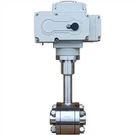
As a seasoned gate valve supplier, I've witnessed firsthand the diverse needs and preferences of our customers when it comes to gate valves. One of the most common questions we encounter is about the difference between manual gate valves and automatic gate valves. In this blog post, I'll delve into the details of these two types of gate valves, highlighting their unique features, advantages, and applications.
Manual Gate Valves
Manual gate valves are the traditional workhorses of the valve industry. They are operated by hand, typically using a wheel or a lever to open and close the valve. The gate, which is the movable part of the valve, is raised or lowered by turning the operating mechanism. This simple yet effective design has made manual gate valves a popular choice for many applications.
Design and Operation
The basic design of a manual gate valve consists of a valve body, a gate, a stem, and an operating mechanism. The valve body is the outer casing that houses the internal components. The gate is a flat or wedge-shaped disc that moves up and down to control the flow of fluid through the valve. The stem connects the gate to the operating mechanism, allowing the user to move the gate.


When the operating mechanism is turned in one direction, the stem raises the gate, opening the valve and allowing fluid to flow through. When the operating mechanism is turned in the opposite direction, the stem lowers the gate, closing the valve and stopping the flow of fluid.
Advantages
- Simplicity and Reliability: Manual gate valves have a simple design with few moving parts, which makes them highly reliable and easy to maintain. They are less likely to malfunction compared to more complex automatic valves.
- Cost-Effective: Manual gate valves are generally less expensive than automatic gate valves. This makes them a cost-effective solution for applications where automation is not required.
- Manual Control: The ability to manually operate the valve gives the user direct control over the flow of fluid. This can be useful in situations where precise control is needed or where automation is not practical.
Applications
Manual gate valves are commonly used in a wide range of industries and applications, including:
- Water and Wastewater Treatment: Manual gate valves are used to control the flow of water and wastewater in treatment plants, distribution systems, and sewer networks.
- Oil and Gas Industry: They are used in pipelines, refineries, and storage facilities to control the flow of oil, gas, and other petroleum products.
- Power Generation: Manual gate valves are used in power plants to control the flow of steam, water, and other fluids in the boiler, turbine, and cooling systems.
Automatic Gate Valves
Automatic gate valves, on the other hand, are designed to operate without manual intervention. They are typically controlled by an external device, such as a solenoid, a motor, or a pneumatic actuator. The actuator receives a signal from a control system and moves the gate to open or close the valve.
Design and Operation
The design of an automatic gate valve is similar to that of a manual gate valve, but with the addition of an actuator. The actuator is connected to the stem of the gate and is responsible for moving the gate up and down.
When the control system sends a signal to the actuator, the actuator moves the stem, which in turn raises or lowers the gate. The control system can be programmed to open or close the valve based on various parameters, such as flow rate, pressure, temperature, or time.
Advantages
- Automation and Remote Control: Automatic gate valves can be integrated into a control system, allowing for remote operation and automation. This can improve efficiency, reduce labor costs, and enhance safety.
- Precise Control: Automatic gate valves can be programmed to open or close at specific times or in response to specific conditions. This allows for precise control of the flow of fluid, which can be important in applications where accuracy is critical.
- Faster Operation: Automatic gate valves can open and close much faster than manual gate valves, which can be beneficial in applications where quick response times are required.
Applications
Automatic gate valves are commonly used in applications where automation, remote control, and precise control are required, such as:
- Industrial Processes: Automatic gate valves are used in chemical plants, food and beverage processing facilities, and other industrial processes to control the flow of fluids in pipelines and equipment.
- HVAC Systems: They are used in heating, ventilation, and air conditioning systems to control the flow of water, steam, and refrigerant.
- Fire Protection Systems: Automatic gate valves are used in fire sprinkler systems to control the flow of water in case of a fire.
Key Differences
Now that we've discussed the features and applications of manual and automatic gate valves, let's summarize the key differences between the two:
- Operation: Manual gate valves are operated by hand, while automatic gate valves are operated by an external device.
- Control: Manual gate valves offer direct manual control, while automatic gate valves offer remote control and automation.
- Cost: Manual gate valves are generally less expensive than automatic gate valves.
- Complexity: Manual gate valves have a simple design with few moving parts, while automatic gate valves are more complex and have additional components, such as actuators and control systems.
- Response Time: Automatic gate valves can open and close much faster than manual gate valves.
Choosing the Right Gate Valve
When choosing between a manual gate valve and an automatic gate valve, several factors need to be considered, including:
- Application Requirements: Consider the specific requirements of your application, such as the need for automation, remote control, precise control, and response time.
- Budget: Determine your budget and compare the costs of manual and automatic gate valves.
- Maintenance and Reliability: Consider the maintenance requirements and reliability of the valve. Manual gate valves are generally easier to maintain and more reliable, while automatic gate valves may require more frequent maintenance and have a higher risk of malfunction.
- Safety: In some applications, safety may be a critical factor. Automatic gate valves can offer enhanced safety features, such as remote operation and automatic shutdown in case of an emergency.
As a gate valve supplier, we offer a wide range of manual and automatic gate valves to meet the diverse needs of our customers. Our product portfolio includes Through Conduit Gate Valve, Forged Gate Valve, and Cast Steel Flange Gate Valve. Whether you need a simple manual valve for a basic application or a sophisticated automatic valve for a complex industrial process, we can help you find the right solution.
If you're interested in learning more about our gate valves or have any questions about choosing the right valve for your application, please don't hesitate to contact us. Our team of experts is always ready to assist you with your valve selection and provide you with the best possible solutions.
References
- "Valve Handbook: Principles and Applications" by J. Paul Tullis
- "Handbook of Valves" by Robert A. Streeter
- "Industrial Valves: Selection, Specification, and Sizing" by William H. Fisher