



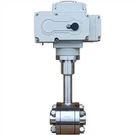

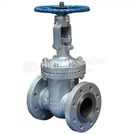

Hey there! As a supplier of forged valves, I often get asked about the differences between forged ball valves and forged butterfly valves. So, I thought I'd write this blog to break it down for you in a simple and easy - to - understand way.
Let's start with a bit of background. Forged valves are made through a forging process, which involves shaping metal by applying compressive forces. This makes the valves stronger and more durable compared to those made by other methods. And both forged ball valves and forged butterfly valves have their own unique features and applications.
Design and Structure
The most obvious difference between forged ball valves and forged butterfly valves lies in their design.
A forged ball valve has a spherical closure element, or the ball. The ball has a hole in the middle, and when the valve is open, the hole aligns with the pipeline, allowing fluid to flow through freely. When you turn the valve handle (usually a lever), the ball rotates 90 degrees, and the solid part of the ball blocks the flow, shutting off the valve. This on - off operation is very straightforward. The ball is usually made of high - quality materials like stainless steel, which can withstand high pressure and corrosion.
On the other hand, a forged butterfly valve has a disc - shaped closure element. The disc is mounted on a shaft in the middle of the valve body. When the valve is open, the disc is parallel to the flow of the fluid, causing minimal obstruction to the flow. To close the valve, the disc rotates 90 degrees around the shaft, perpendicular to the flow, effectively blocking the passage. The disc of a butterfly valve is generally thinner and lighter compared to the ball in a ball valve.
Flow Control
When it comes to flow control, each valve has its own characteristics.
Forged ball valves are great for on - off control. They can provide a tight shut - off, which means there's very little leakage when the valve is closed. This makes them ideal for applications where you need to completely stop the flow, like in pipelines that carry hazardous chemicals or high - pressure gases. However, they're not the best for precise flow regulation. Since the ball rotates 90 degrees for full open or full close, it's hard to control the flow rate in between.
Forged butterfly valves, on the other hand, are better at flow regulation. You can adjust the angle of the disc to control the amount of fluid passing through the valve. For example, if you only need a small amount of water to flow in a water treatment plant, you can set the disc at a certain angle to restrict the flow. But they may not provide as tight a shut - off as ball valves. There might be a small amount of leakage when the valve is fully closed, especially in older or lower - quality butterfly valves.
Pressure and Temperature Ratings
Pressure and temperature are important factors to consider when choosing a valve.
Forged ball valves can generally handle higher pressures. Their solid spherical design allows them to withstand the force exerted by high - pressure fluids. They're commonly used in high - pressure systems such as oil and gas pipelines, where the pressure can be extremely high. In terms of temperature, they can also tolerate a wide range of temperatures, from very cold to very hot environments.
Forged butterfly valves, while they can handle a decent amount of pressure, are usually not as good as ball valves in high - pressure situations. Their disc - shaped design is more suitable for lower to medium - pressure applications. As for temperature, they can work well in normal temperature ranges, but extreme temperatures might affect the performance of the valve and the sealing materials.
Size and Installation
Size can also be a deciding factor.
Forged ball valves are often available in smaller sizes. They're more compact and can be easily installed in tight spaces. This makes them a popular choice for small - scale industrial applications or in systems where space is limited. The installation of a ball valve is relatively simple, usually just connecting the valve to the pipeline using flanges or threaded connections.
Forged butterfly valves, on the contrary, are more commonly found in larger sizes. They're suitable for applications that require large - diameter pipelines, such as in water supply systems for cities or large - scale industrial cooling systems. However, due to their larger size, the installation might be a bit more complicated and may require more space.
Cost
Cost is always a concern for buyers.
Generally speaking, forged ball valves tend to be more expensive. The manufacturing process of the ball and the precision required for a tight shut - off contribute to the higher cost. Also, the materials used in ball valves, especially for high - pressure and high - temperature applications, are often more costly.
Forged butterfly valves are usually more cost - effective. Their simpler design and the fact that they can be made in larger sizes at a relatively lower cost make them a budget - friendly option for many applications.
Applications
The differences in design, flow control, pressure ratings, size, and cost all lead to different applications for these two types of valves.
Forged ball valves are widely used in the oil and gas industry. They're used in pipelines for transporting crude oil, natural gas, and refined products. They're also used in chemical processing plants to control the flow of various chemicals. Another application is in the power generation industry, where they're used in steam and water systems. You can also check out our Forged Steel Globe Valves for related applications.
Forged butterfly valves are commonly used in water treatment plants to control the flow of water during the treatment process. They're also used in HVAC (Heating, Ventilation, and Air Conditioning) systems to regulate the flow of air and water. In addition, they're used in large - scale industrial cooling systems. And if you're looking for related products, our Y Type Strainer can be a great addition to your system.
Conclusion
In conclusion, forged ball valves and forged butterfly valves have distinct differences in design, flow control, pressure and temperature ratings, size, cost, and applications. If you need a valve for on - off control in high - pressure systems, a forged ball valve is a great choice. But if you need to regulate the flow in lower to medium - pressure applications, especially in large - diameter pipelines, a forged butterfly valve might be more suitable.


As a supplier of forged valves, we offer a wide range of high - quality forged ball valves and forged butterfly valves. We also have other products like Forged Steel Gate Valves that might meet your needs. If you're in the market for forged valves and have any questions or need help in choosing the right valve for your application, don't hesitate to get in touch with us. We're here to assist you with all your valve - related requirements and look forward to discussing your procurement needs with you.
References
- Valve Handbook: A Guide to Valve Technology and Applications
- Industrial Valve Standards and Practices