


Hey there! As a supplier of ASME B16.5 RF flanges, I've seen firsthand how the flange connection type can have a huge impact on the overall performance of a pipeline system. In this blog post, I'm gonna break down what those impacts are and why it matters to you.
Let's start with a quick intro. ASME B16.5 is a standard that covers pipe flanges and flanged fittings in sizes NPS 1/2 through NPS 24 for pressure classes 150 through 2500. The RF in ASME B16.5 RF stands for Raised Face, which is one of the most common flange face types. You can check out our RF Flange NPS 1/2~NPS24 for more details on these flanges.
Sealing Performance
One of the most important aspects of a pipeline system is its sealing performance. The flange connection type plays a crucial role in this. The RF flange has a raised face that provides a larger sealing surface compared to some other types. This larger surface area allows for better distribution of the gasket load, which in turn helps to create a more reliable seal.
When the gasket is compressed between the two RF flanges, it fills in any irregularities on the flange faces and prevents leakage. However, the effectiveness of the seal also depends on factors like the type of gasket used, the bolt tightening torque, and the operating conditions of the pipeline. For example, in high-pressure or high-temperature applications, you might need a more specialized gasket to ensure a proper seal.
On the other hand, if you were to use a different flange connection type, say the ASME B16.5 RTJ (Ring Type Joint), the sealing mechanism would be different. RTJ flanges use a metal ring gasket that fits into a grooved flange face. This type of connection is often used in more demanding applications where higher pressure and better sealing are required. But it also means more complex installation and potentially higher costs.
Structural Integrity
The flange connection type also affects the structural integrity of the pipeline system. The RF flange is designed to be bolted together, which creates a rigid connection between the pipes. This helps to withstand the internal pressure of the fluid flowing through the pipeline and any external forces that might act on it.
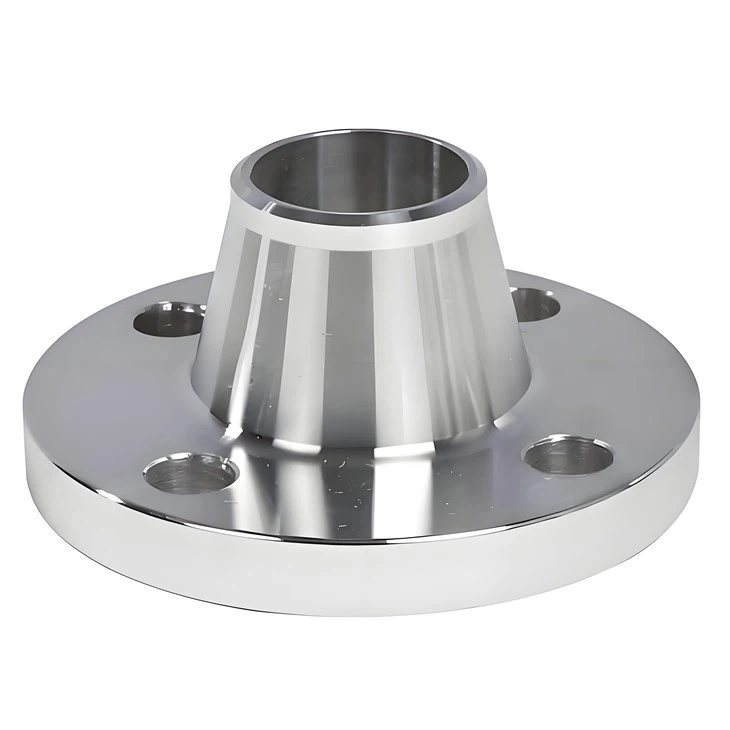
For instance, the Weld Neck Flange is another type of flange that offers excellent structural integrity. It has a long tapered neck that is welded to the pipe, providing a smooth transition between the flange and the pipe. This reduces stress concentrations and makes the connection more resistant to fatigue and vibration.
In comparison, RF flanges are more commonly used in general-purpose applications where the structural requirements are not as extreme. But they still need to be properly installed and maintained to ensure their long-term structural integrity. If the bolts are not tightened evenly or if the flange faces are damaged, it can lead to leaks or even failure of the connection.
Installation and Maintenance
The choice of flange connection type can also impact the installation and maintenance of the pipeline system. RF flanges are relatively easy to install compared to some other types. They can be quickly bolted together, which reduces the installation time and labor costs.
During maintenance, RF flanges are also easier to access and replace. If a gasket needs to be replaced or if there is a problem with the flange itself, it can be disassembled and reassembled without too much hassle. This is a big advantage in industries where downtime needs to be minimized.
However, other flange types might require more specialized tools and skills for installation and maintenance. For example, RTJ flanges need precise machining of the grooved faces and careful handling of the metal ring gaskets. This can make the installation and maintenance process more time-consuming and expensive.
Flow Characteristics
The flange connection type can have an effect on the flow characteristics of the pipeline system as well. The raised face of the RF flange can cause a small amount of turbulence in the fluid flow near the connection. While this might not be a significant issue in most applications, it could be a concern in systems where smooth flow is critical, such as in some chemical processing or pharmaceutical applications.
In contrast, flanges with a more streamlined design might have less impact on the flow. But these types of flanges are often more specialized and might not be as widely available or cost-effective.
Cost Considerations
Finally, cost is always an important factor when choosing a flange connection type. RF flanges are generally more cost-effective compared to some other types, especially for large-scale projects. They are widely available, and the materials and manufacturing processes are well-established, which helps to keep the costs down.
However, you also need to consider the long-term costs, including installation, maintenance, and potential replacement. If a more expensive flange type can provide better performance and reliability, it might be a more cost-effective choice in the long run.
Conclusion
In conclusion, the flange connection type has a significant influence on the overall performance of the pipeline system. As a supplier of ASME B16.5 RF flanges, I understand the importance of choosing the right flange for your specific application. Whether it's sealing performance, structural integrity, installation and maintenance, flow characteristics, or cost, each factor needs to be carefully considered.
If you're in the market for high-quality ASME B16.5 RF flanges or have any questions about flange connection types, feel free to reach out. We're here to help you make the best decision for your pipeline system. Let's talk and see how we can work together to meet your needs.

References
- ASME B16.5 Standard for Pipe Flanges and Flanged Fittings
- Industry reports on pipeline system performance and flange technology
- Technical literature from flange manufacturers and suppliers